Shop Cascina Borine
Discover the latest additions to our collection—handpicked pieces that bring new energy to your space.
Discover the latest additions to our collection—handpicked pieces that bring new energy to your space.
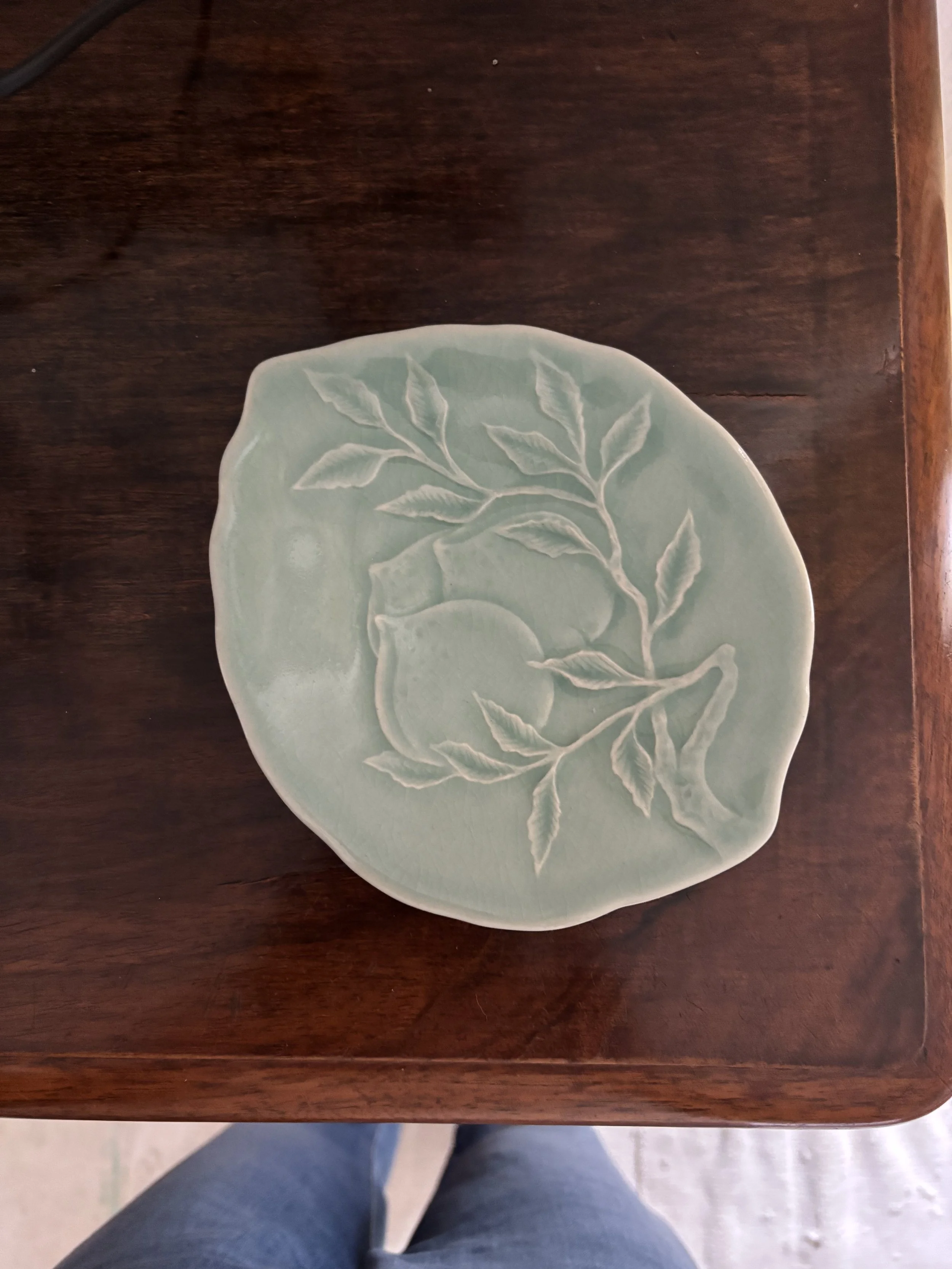
Korea, 21st century
A delicate contemporary Korean ceramic dish, finished in a soft celadon-green glaze. Its gently irregular form is decorated in relief with a naturalistic branch of fruit and leaves, creating a subtle contrast against the pale, luminous surface. A beautiful contemporary interpretation of Korea’s long tradition of celadon ceramics.
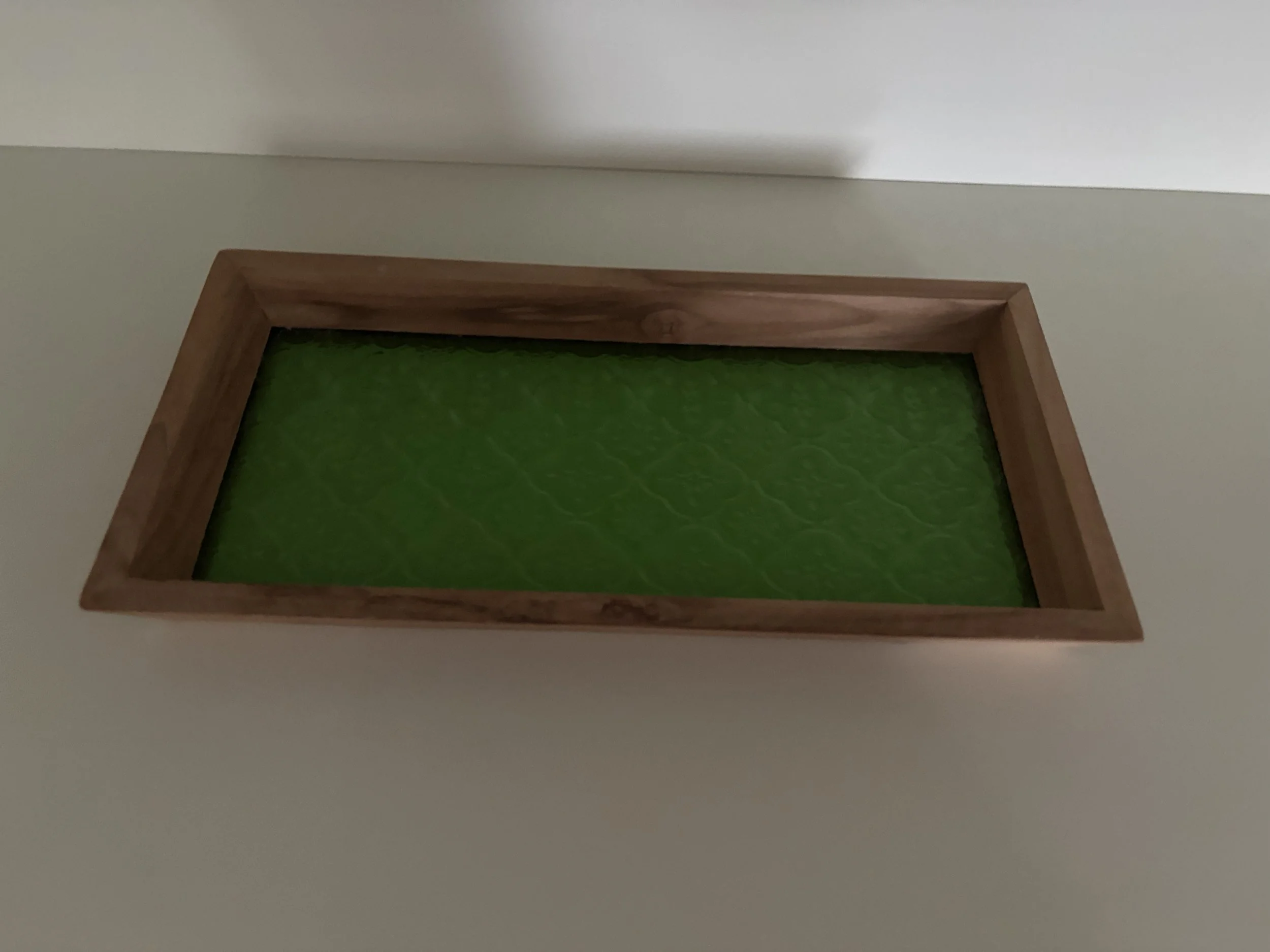
A decorative tray made from coloured glass reclaimed from the windows of old traditional Thai houses. Originally used to filter the tropical light while bringing colour to domestic interiors, these vintage glass panels are given a new life as contemporary decorative objects.
Each piece retains the subtle variations and character of the original glass, making every tray slightly unique — a beautiful example of Bangkok craftsmanship combining architectural heritage with creative reuse.
Raymond Peynet (1908–1999) was a French illustrator and cartoonist best known for Les Amoureux de Peynet, the tender young couple he created in 1942, inspired by a music pavilion in Valence.
With his delicate line, gentle humour and unmistakably romantic spirit, Peynet created a poetic world celebrating love and everyday tenderness. His famous lovers became an icon of post-war French popular culture, appearing on everything from books and posters to porcelain, jewellery, dolls and postage stamps.
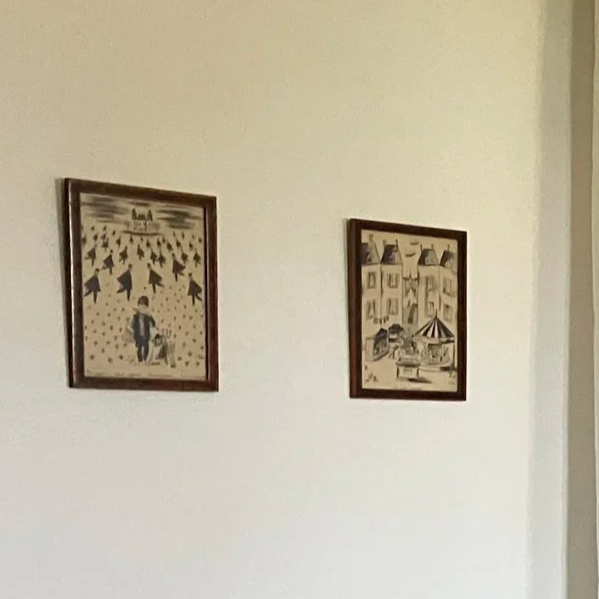
In this witty drawing, Raymond Peynet plays on the double meaning of the French word agent. A young man stands in a field plucking the petals from a flower, surrounded by an improbable procession of identically dressed men who appear to be policemen or officials. The caption — “Un agent…, deux agents…, trois agents…, pas d’agents !” — humorously transforms the familiar “il m’aime, un peu, beaucoup…” flower-petal game into an absurd counting rhyme. With a few simple lines, Peynet combines visual poetry, wordplay and gentle surrealism, turning an ordinary romantic ritual into a charmingly nonsensical scene.
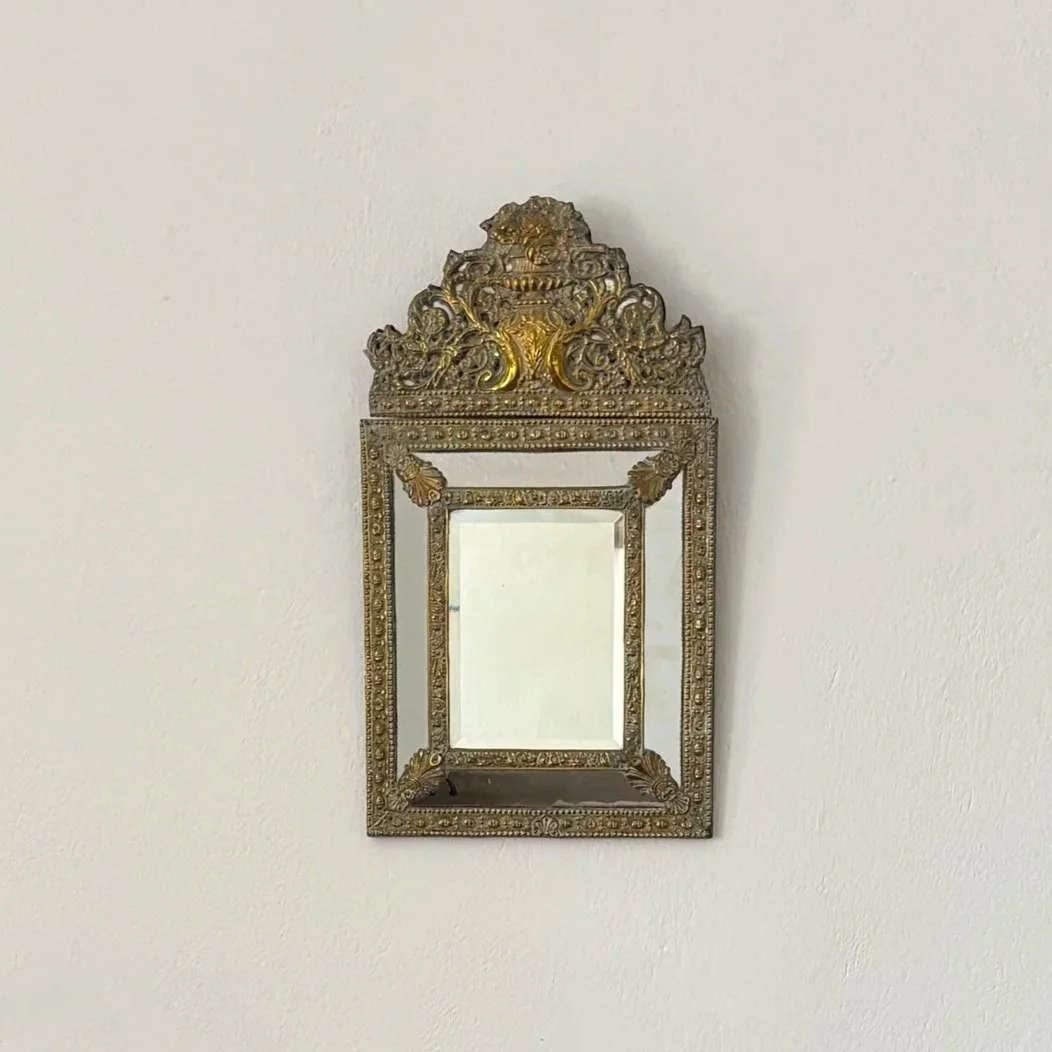
Parclose mirrors enjoyed renewed popularity in France during the Napoleon III period (1852–1870), an era characterised by a taste for rich decoration and the revival of earlier historical styles. Their distinctive construction features a central mirror surrounded by smaller mirrored panels, or parcloses, often set within an elaborately carved and gilded wooden frame. Inspired by the grandeur of 17th- and 18th-century interiors, Napoleon III examples tend to be particularly decorative, incorporating scrolls, foliage, flowers and architectural motifs. Designed to catch and multiply the light, these mirrors brought both brilliance and a sense of opulence to the sophisticated interiors of Second Empire France.
Raymond Peynet (1908–1999) was a French illustrator and cartoonist best known for Les Amoureux de Peynet, the tender young couple he created in 1942, inspired by a music pavilion in Valence.
With his delicate line, gentle humour and unmistakably romantic spirit, Peynet created a poetic world celebrating love and everyday tenderness. His famous lovers became an icon of post-war French popular culture, appearing on everything from books and posters to porcelain, jewellery, dolls and postage stamps.
In Le Petit Distrait (1943), Raymond Peynet creates a charming visual joke around a moment of innocent distraction. While the children ride the nearby carousel, one little boy has mistakenly climbed onto the back of the statue of Henri IV, apparently believing he has taken his place on one of the merry-go-round horses. Left behind as the carousel turns, he becomes the petit distrait of the title. With his delicate line and gentle humour, Peynet transforms this simple misunderstanding into a wonderfully poetic scene, characteristic of his affectionate observation of everyday life.
No results match your search. Try removing a few filters.