Shop Cascina Borine
Discover the latest additions to our collection—handpicked pieces that bring new energy to your space.
Discover the latest additions to our collection—handpicked pieces that bring new energy to your space.
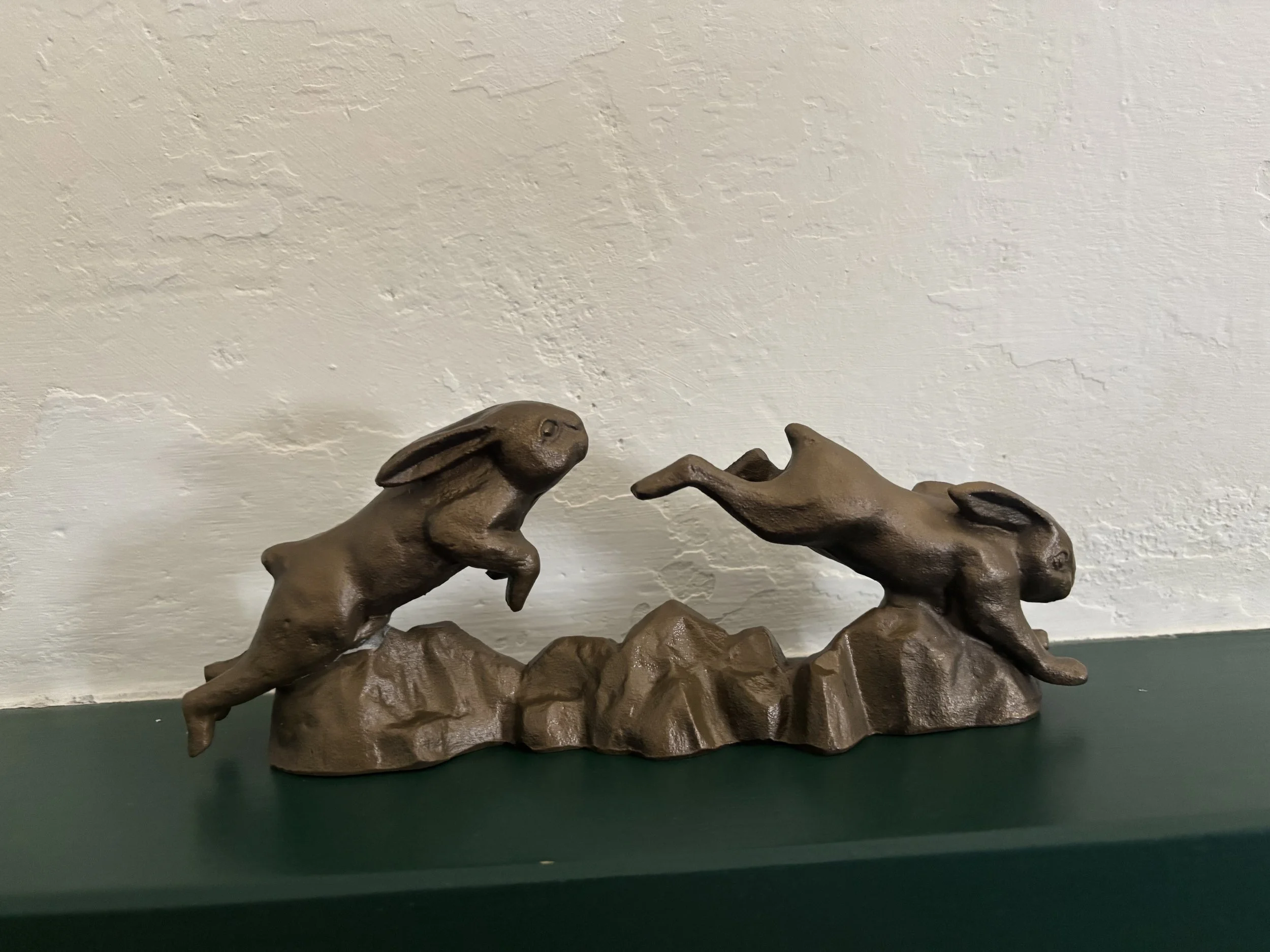
Japan, mid 20th century
A charming decorative sculpture depicting two hares captured mid-leap over a rocky landscape. The elongated bodies and dynamic poses beautifully convey the speed and agility of the animals, while the warm bronze-toned finish gives the piece a timeless character. A playful and elegant celebration of nature and movement.
(Restorations)
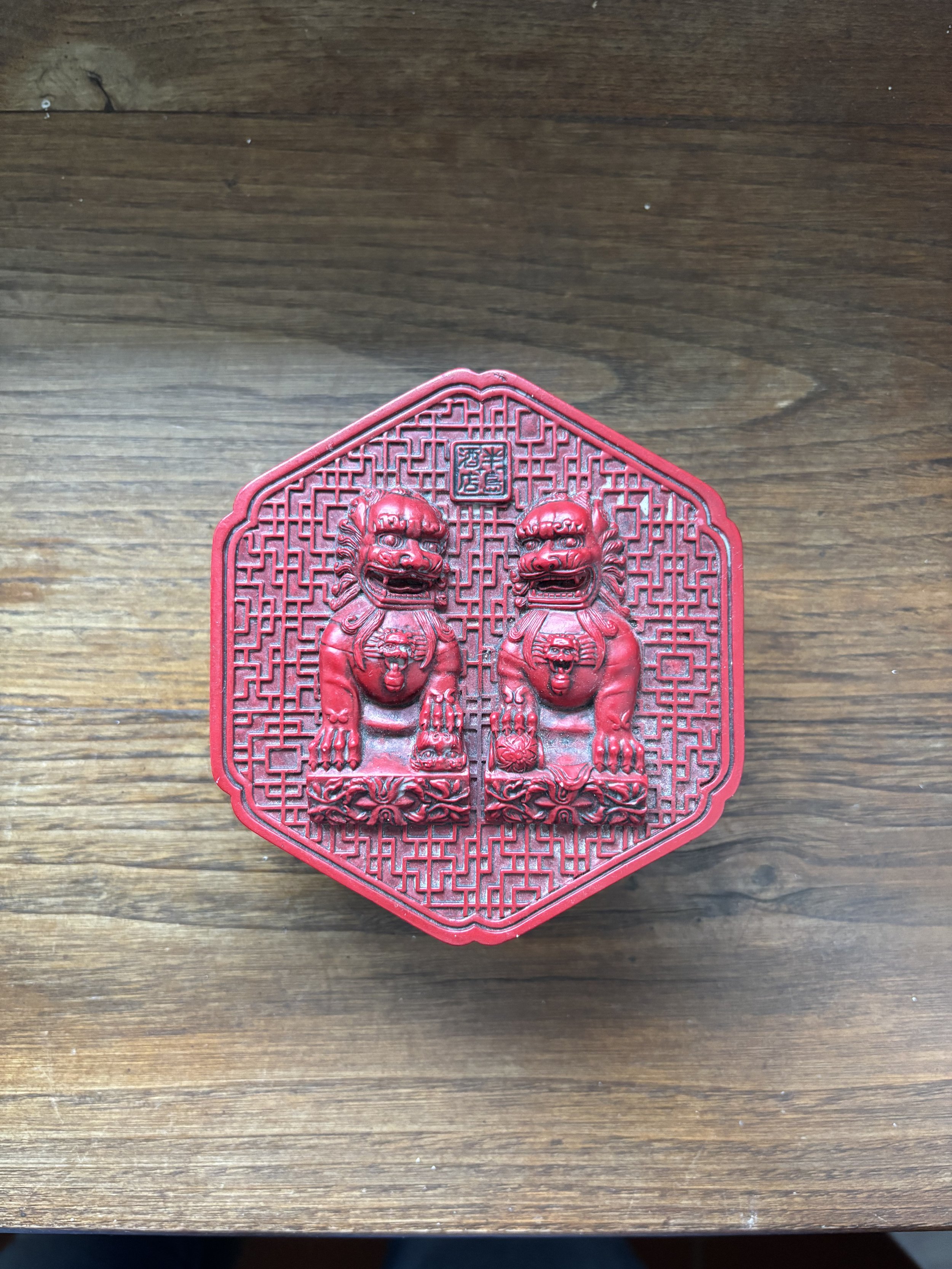
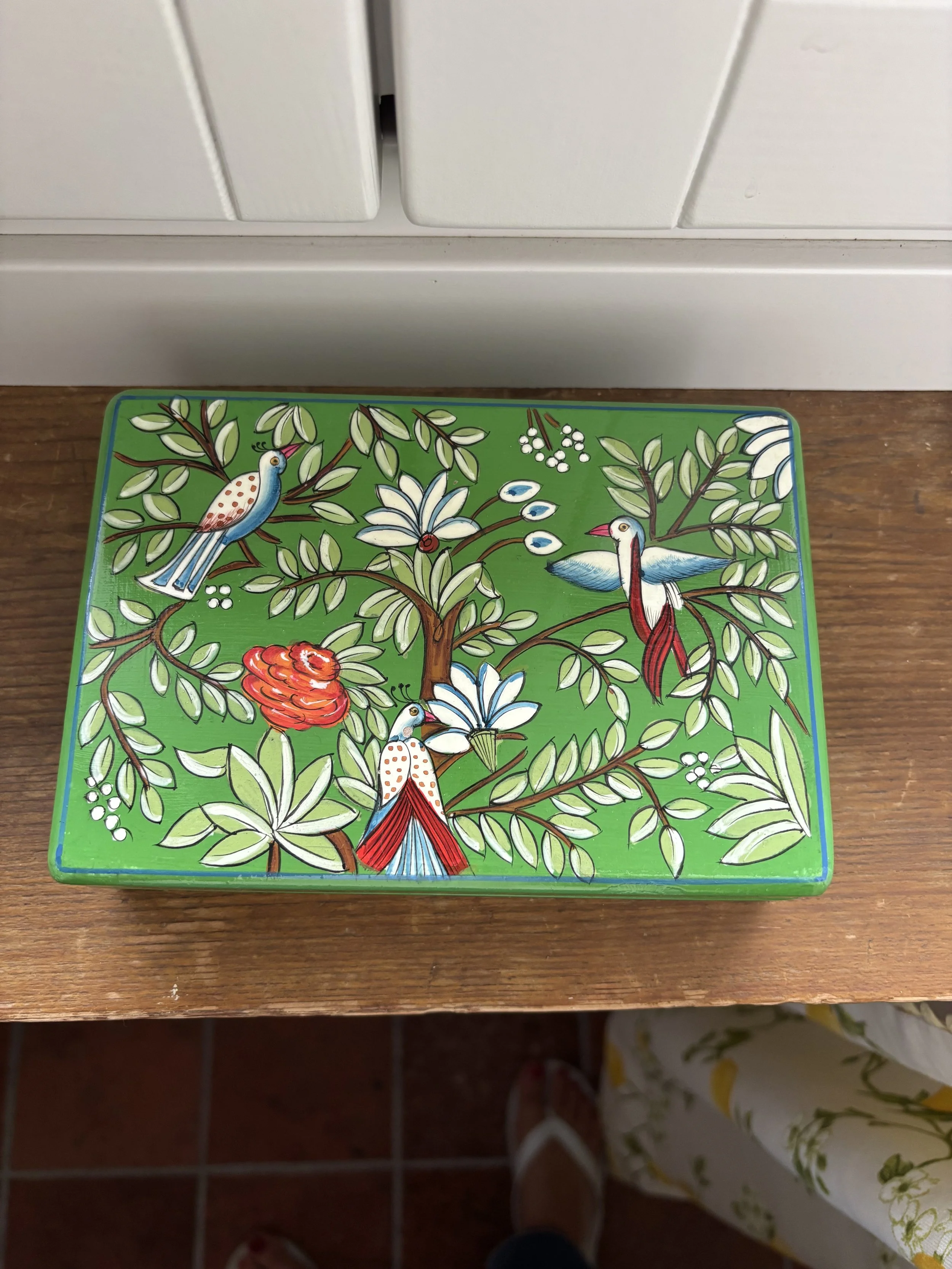
A contemporary Chinese red lacquer-style decorative box, its lid moulded in relief with a pair of traditional guardian lions (shishi) against an intricate geometric lattice. Finished in deep red with dark accents highlighting the details, the design draws on traditional Chinese symbols of protection and good fortune.
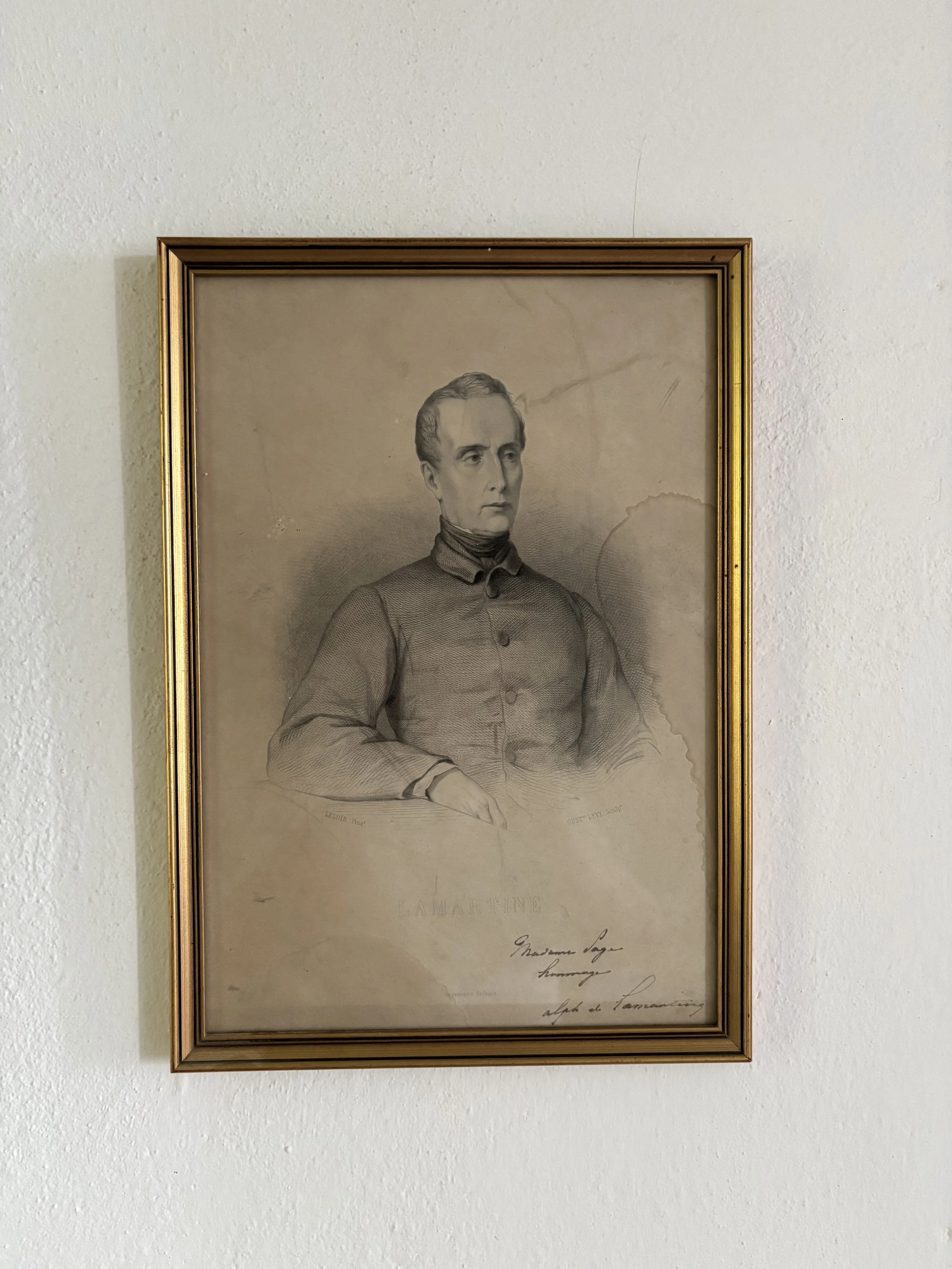
A 19th-century lithographic portrait of Alphonse de Lamartine (1790–1869), the celebrated French poet, writer and statesman, and one of the leading figures of French Romanticism. The portrait bears a handwritten dedication and autograph signature by Lamartine to Madame Page, our great-great-great-grandmother, making it both a historical document and a treasured piece of our family history
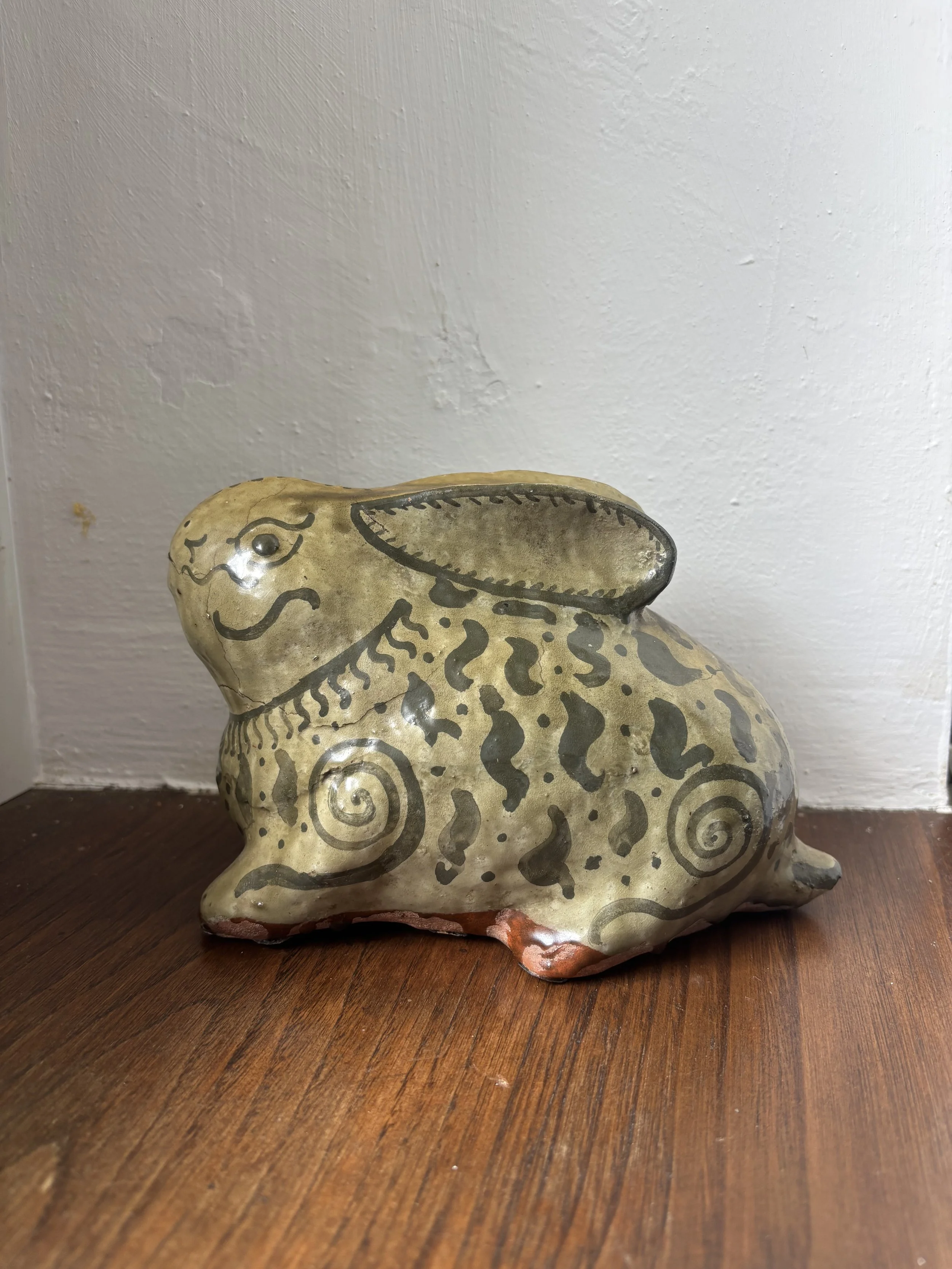
Ceramic rabbot
Thailand, 20th century
A charming Thai ceramic rabbit, modelled in a traditional folk style and covered in a warm green-ochre glaze. Its freely painted dark decoration, including bold spirals and stylised markings, gives the piece a wonderfully expressive character. Thailand, 20th century.
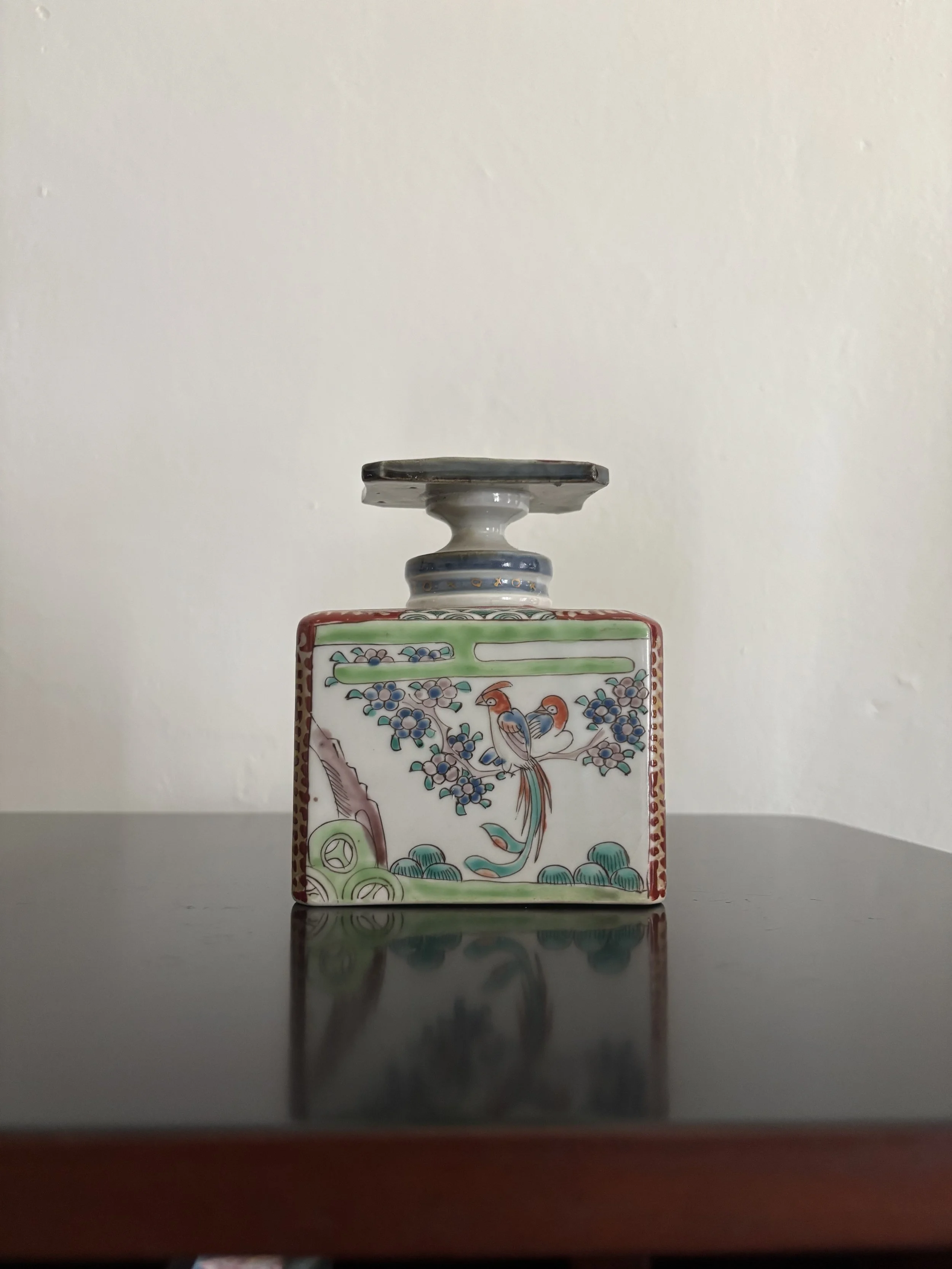
Japan, 19th century
A decorative Japanese Arita porcelain bottle, dating from the late Edo to early Meiji period. Finely painted in polychrome enamels and gilt with birds, flowers and traditional ornamental motifs. The lid bears the mark Zōshuntei Sanpo zō (蔵春亭三保造), meaning “Made by Zōshuntei Sanpo,” a celebrated Arita brand associated with the merchant and exporter Hisatomi Yojibei during the 19th century.
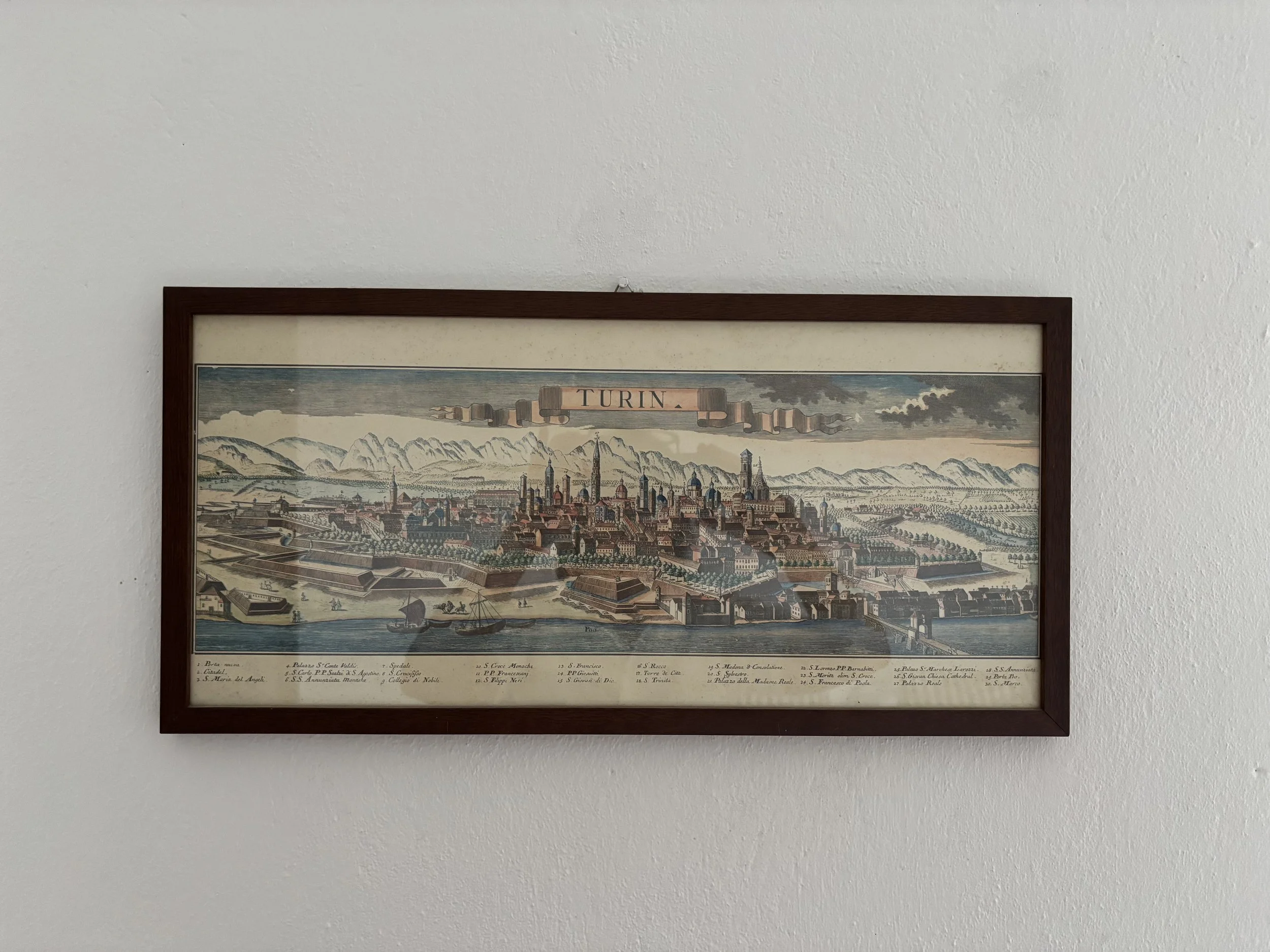
A panoramic view of Turin seen from across the River Po, after a composition by the German draughtsman Friedrich Bernhard Werner (1690–1776) and originally published in Augsburg by Georg Balthasar Probst in 1731. The city unfolds against the dramatic backdrop of the Alps, with its principal churches, palaces and landmarks identified by a numbered key below.
This hand-coloured example is a reduced version of the celebrated large-format view, whose original impression measures approximately one metre wide. The precise date and edition of this smaller version remain to be established.
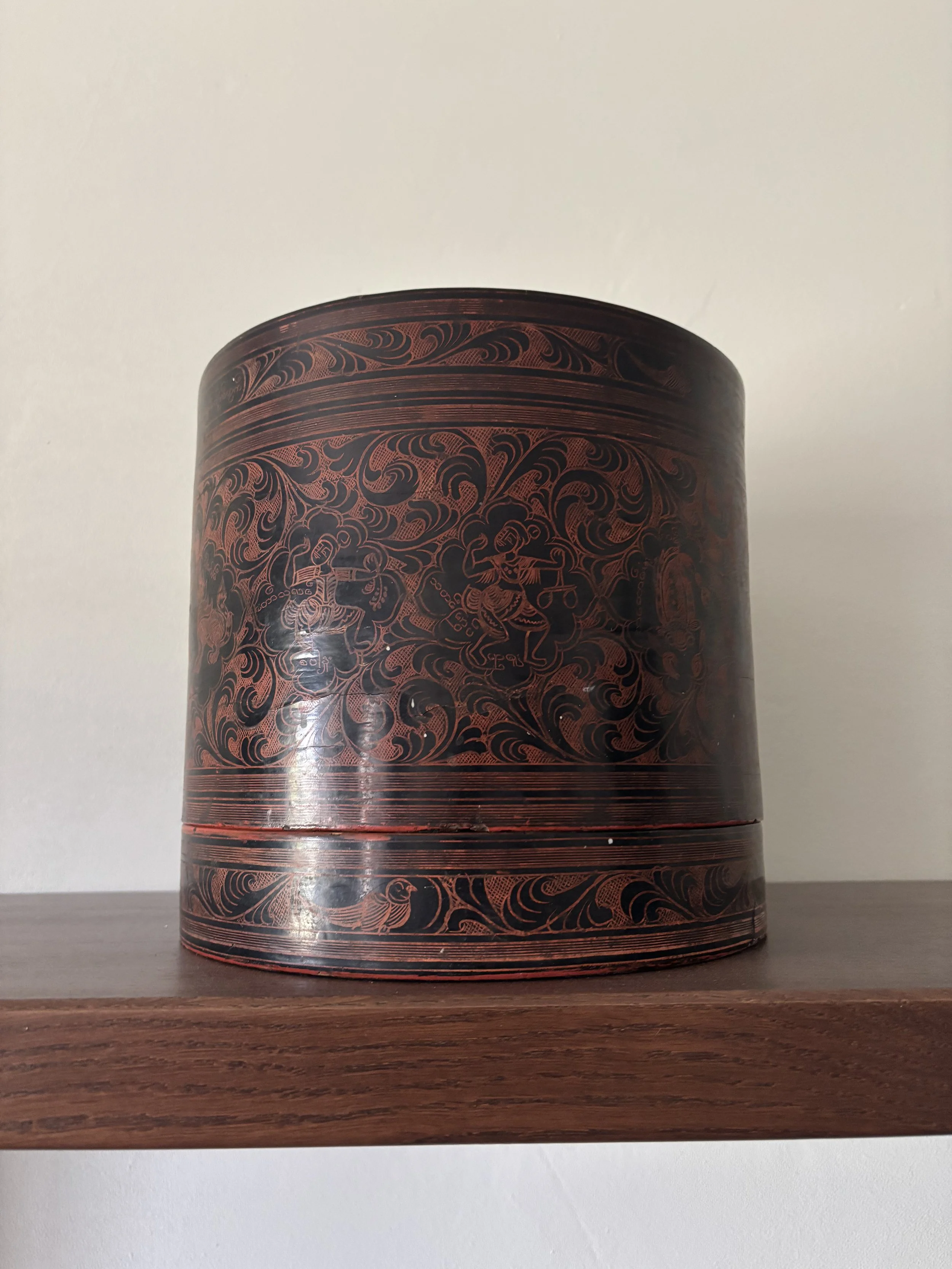
A traditional Burmese kun-it, or betel box, dating from the late 19th or early 20th century. Built from lightweight bamboo and finished with successive layers of lacquer, the cylindrical box contains two removable trays originally used to hold the different ingredients required for preparing betel.
The exterior is finely decorated using the traditional yun technique, in which intricate designs are incised into the lacquer and filled with contrasting pigment. Figures appear amongst an exceptionally dense pattern of scrolling foliage, while the interiors are finished in characteristic deep red lacquer.
An object originally made for everyday ritual and hospitality, today it makes a particularly beautiful decorative box.
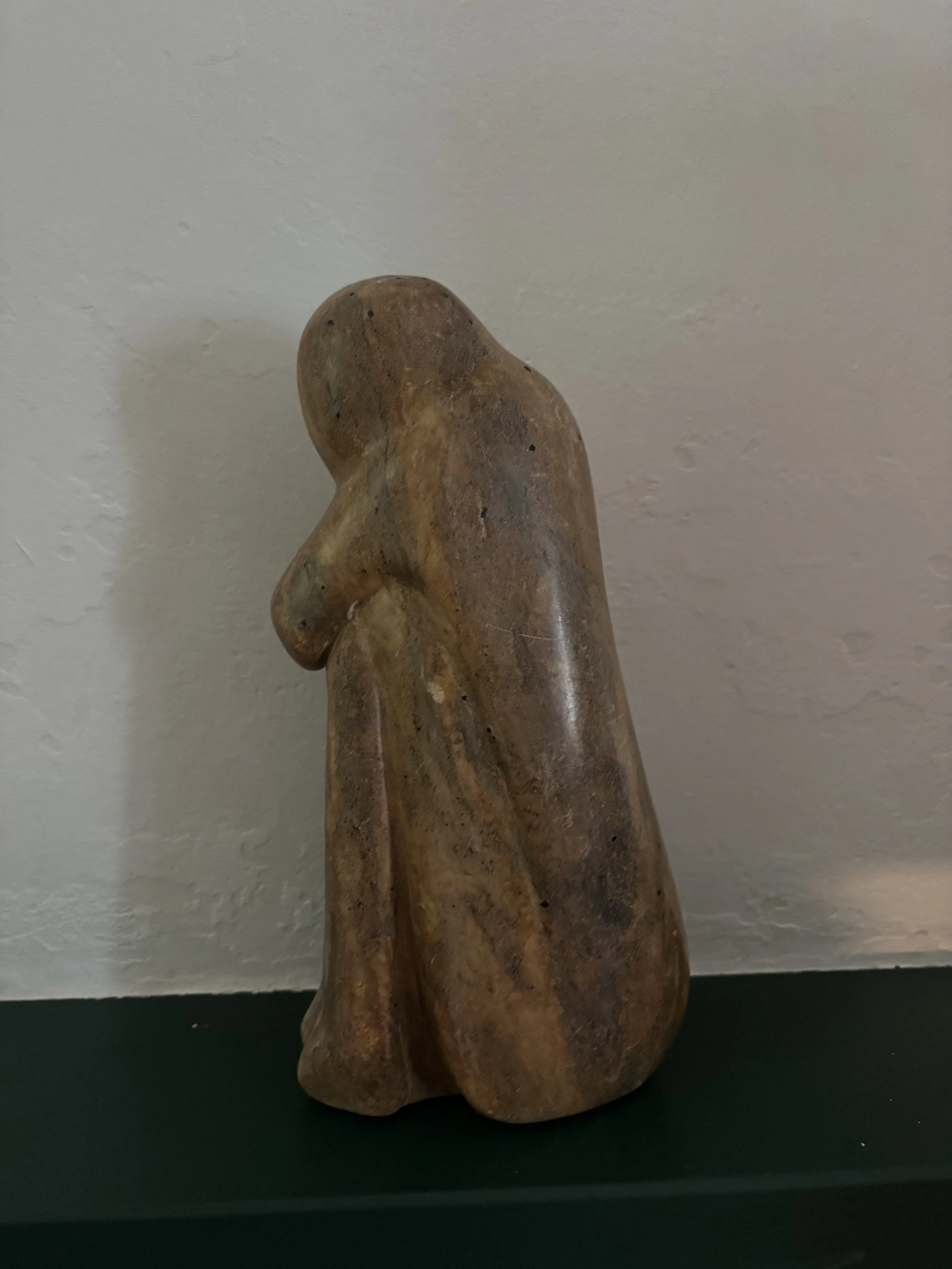
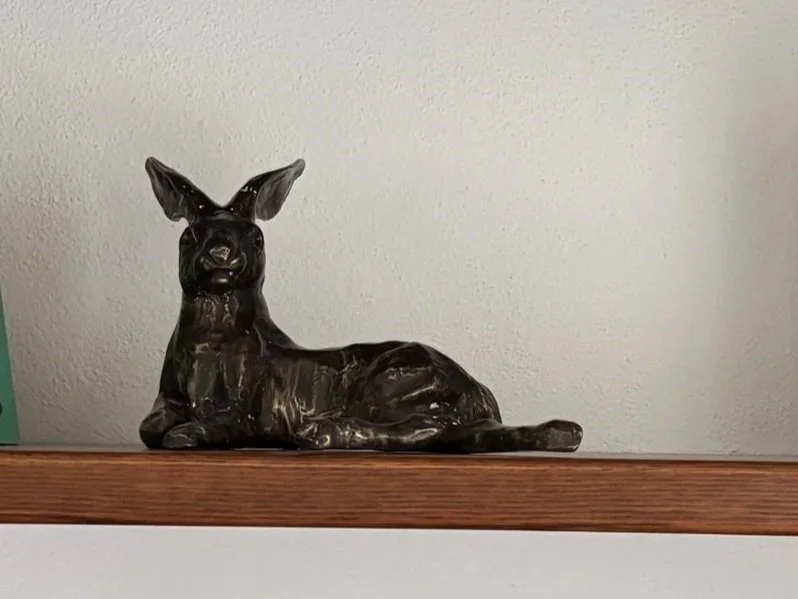
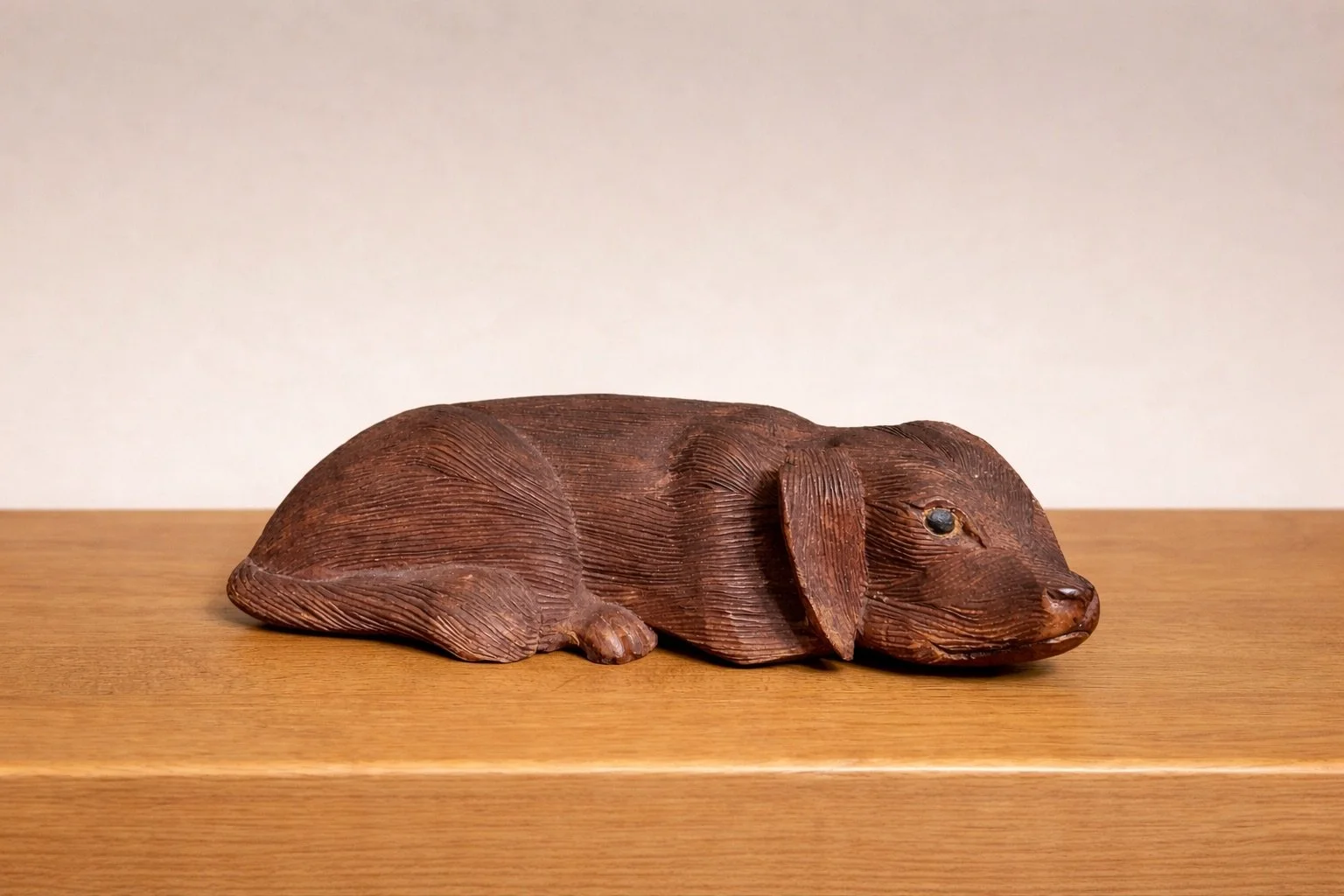
Michael’s mother was a talented and passionate sculptor. This statue is a cherished family piece, a reminder of her creativity and artistic spirit. It is therefore not for sale, and we kindly ask that you treat it with care and respect.
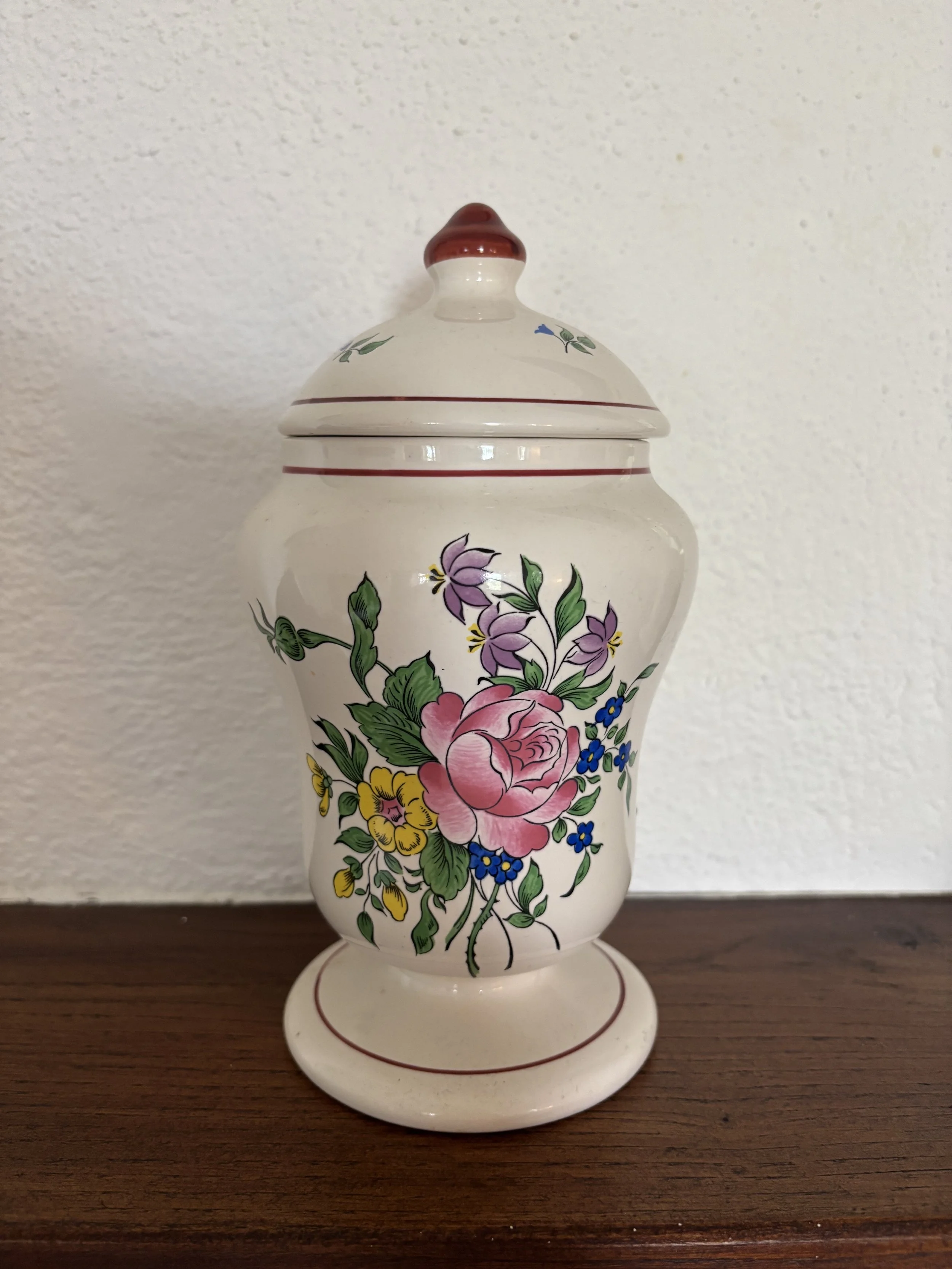
Lunéville has been one of the great centres of French ceramic production since the 18th century, when its celebrated faience manufacture was established in Lorraine. Over the following centuries, the workshops of Lunéville developed an extraordinarily varied production, from refined tableware to highly decorative objects, often distinguished by lively hand-painted flowers, botanical motifs and elegant forms. Particularly flourishing during the 19th and early 20th centuries, Lunéville ceramics combine traditional craftsmanship with the changing tastes of French decorative arts, from historicist designs to Art Nouveau and Art Deco.
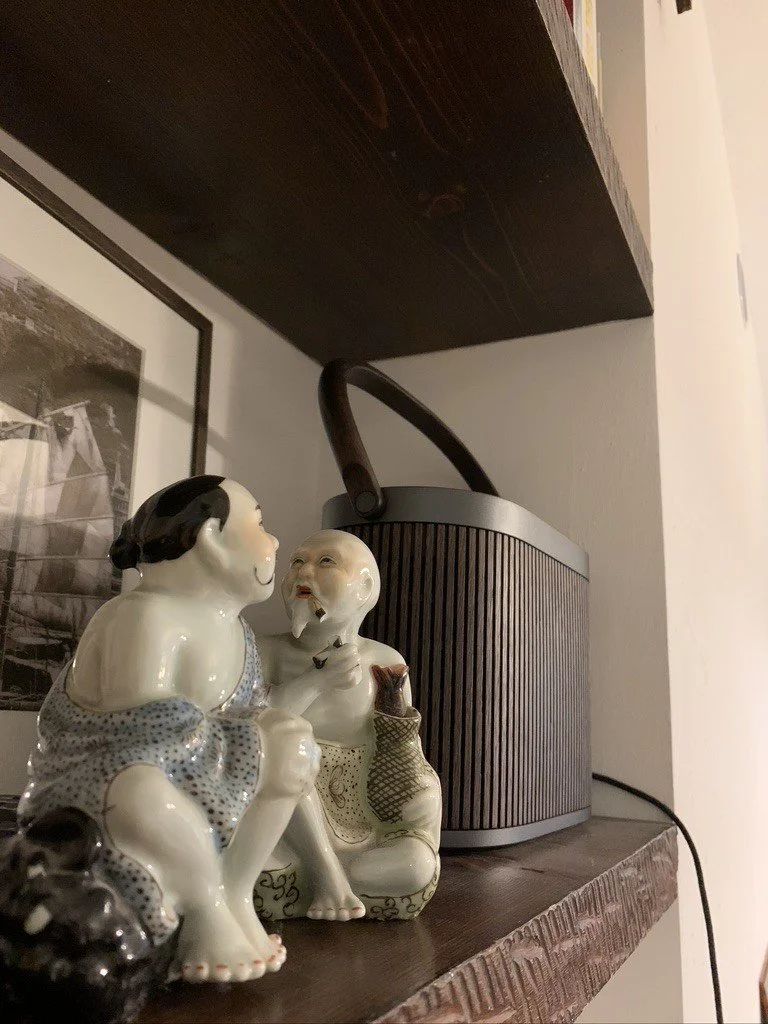
China, 20th century
A charming pair of Chinese porcelain figures inspired by the Hehe Erxian (和合二仙), the Two Immortals of Harmony and Union. Traditionally portrayed as two jovial men sharing a moment of laughter and companionship, they have long been associated in Chinese culture with harmony, happiness, friendship and a happy marriage. Their expressive faces and wonderfully informal poses give this traditional auspicious subject a particularly joyful character.
Please note that one hand is broken
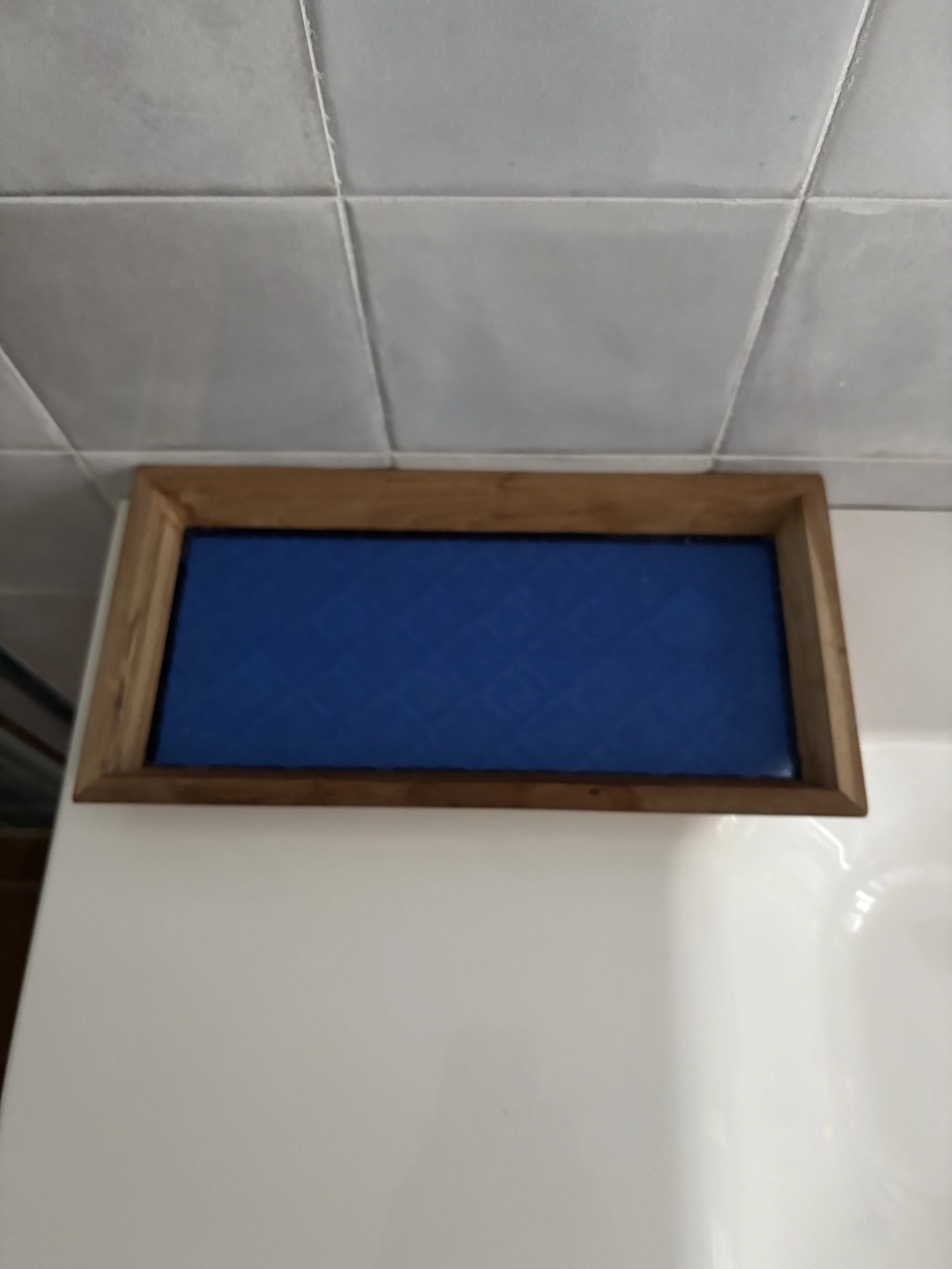
A decorative tray made from coloured glass reclaimed from the windows of old traditional Thai houses. Originally used to filter the tropical light while bringing colour to domestic interiors, these vintage glass panels are given a new life as contemporary decorative objects.
Each piece retains the subtle variations and character of the original glass, making every tray slightly unique — a beautiful example of Bangkok craftsmanship combining architectural heritage with creative reuse.
Michael’s mother was a talented and passionate sculptor. This statue is a cherished family piece, a reminder of her creativity and artistic spirit. It is therefore not for sale, and we kindly ask that you treat it with care and respect.
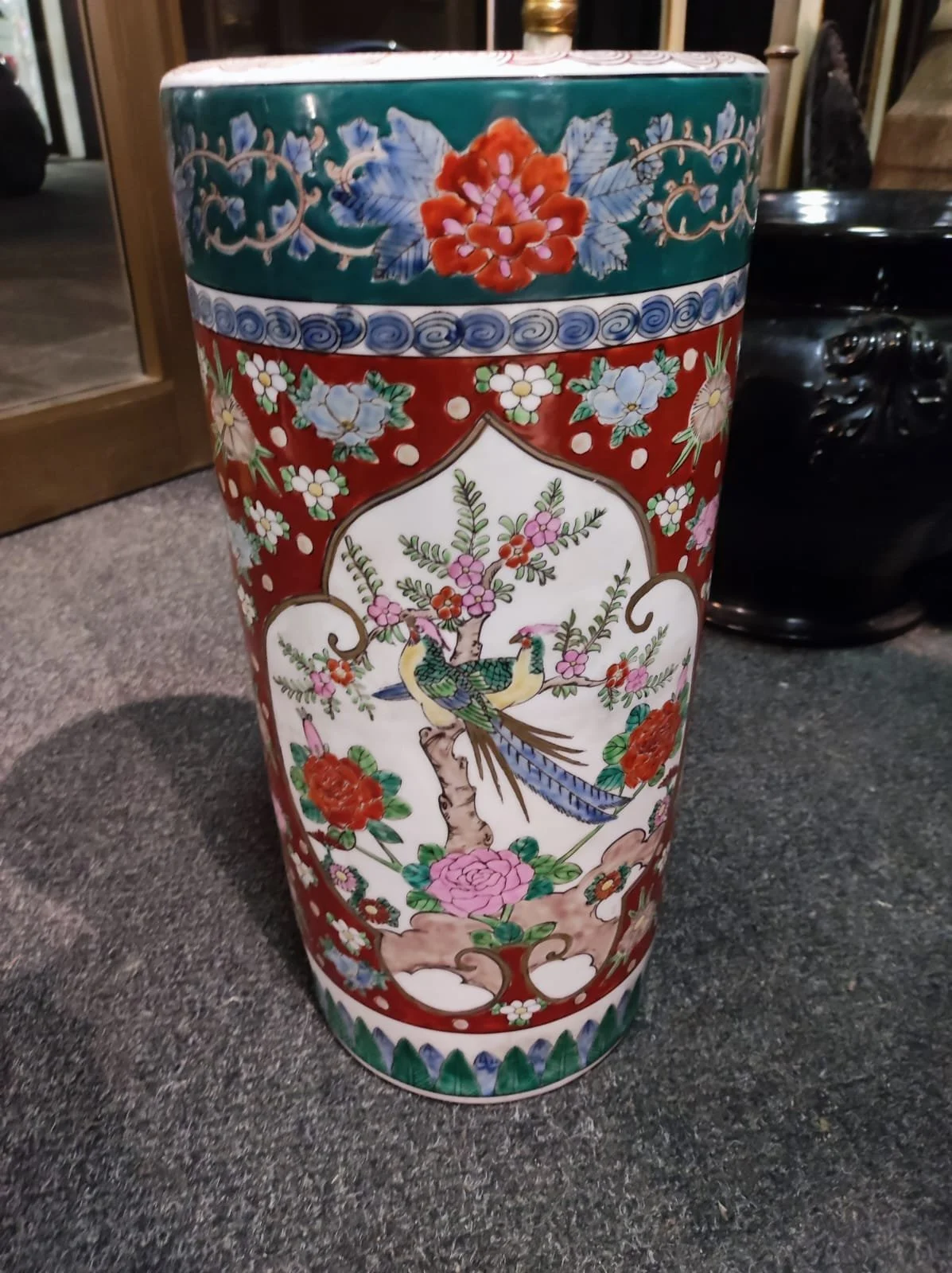
A large Chinese porcelain rouleau vase, decorated in the colourful famille rose tradition. Its tall cylindrical form takes inspiration from rouleau vases first popularised during the Qing dynasty, while its richly painted floral decoration reflects the long tradition of Chinese porcelain made for the export market. Originally conceived as a decorative floor vase or umbrella stand, it brings together centuries-old Chinese forms with the exuberant colours that made Chinese export porcelain so popular in European interiors.
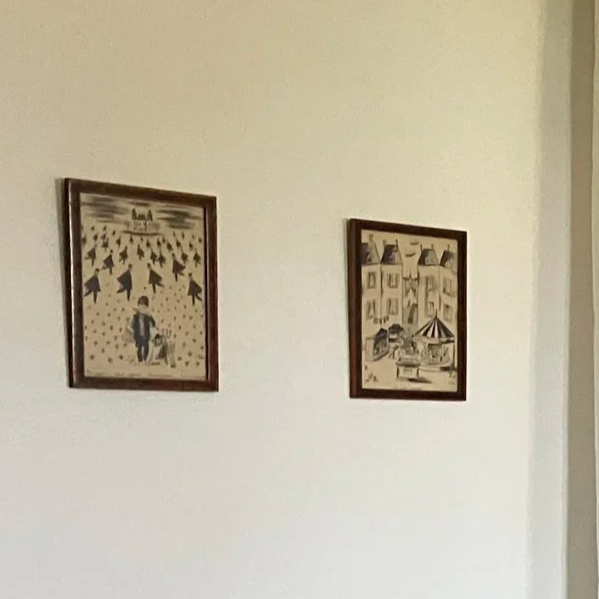
Raymond Peynet (1908–1999) was a French illustrator and cartoonist best known for Les Amoureux de Peynet, the tender young couple he created in 1942, inspired by a music pavilion in Valence.
With his delicate line, gentle humour and unmistakably romantic spirit, Peynet created a poetic world celebrating love and everyday tenderness. His famous lovers became an icon of post-war French popular culture, appearing on everything from books and posters to porcelain, jewellery, dolls and postage stamps.
In this witty drawing, Raymond Peynet plays on the double meaning of the French word agent. A young man stands in a field plucking the petals from a flower, surrounded by an improbable procession of identically dressed men who appear to be policemen or officials. The caption — “Un agent…, deux agents…, trois agents…, pas d’agents !” — humorously transforms the familiar “il m’aime, un peu, beaucoup…” flower-petal game into an absurd counting rhyme. With a few simple lines, Peynet combines visual poetry, wordplay and gentle surrealism, turning an ordinary romantic ritual into a charmingly nonsensical scene.
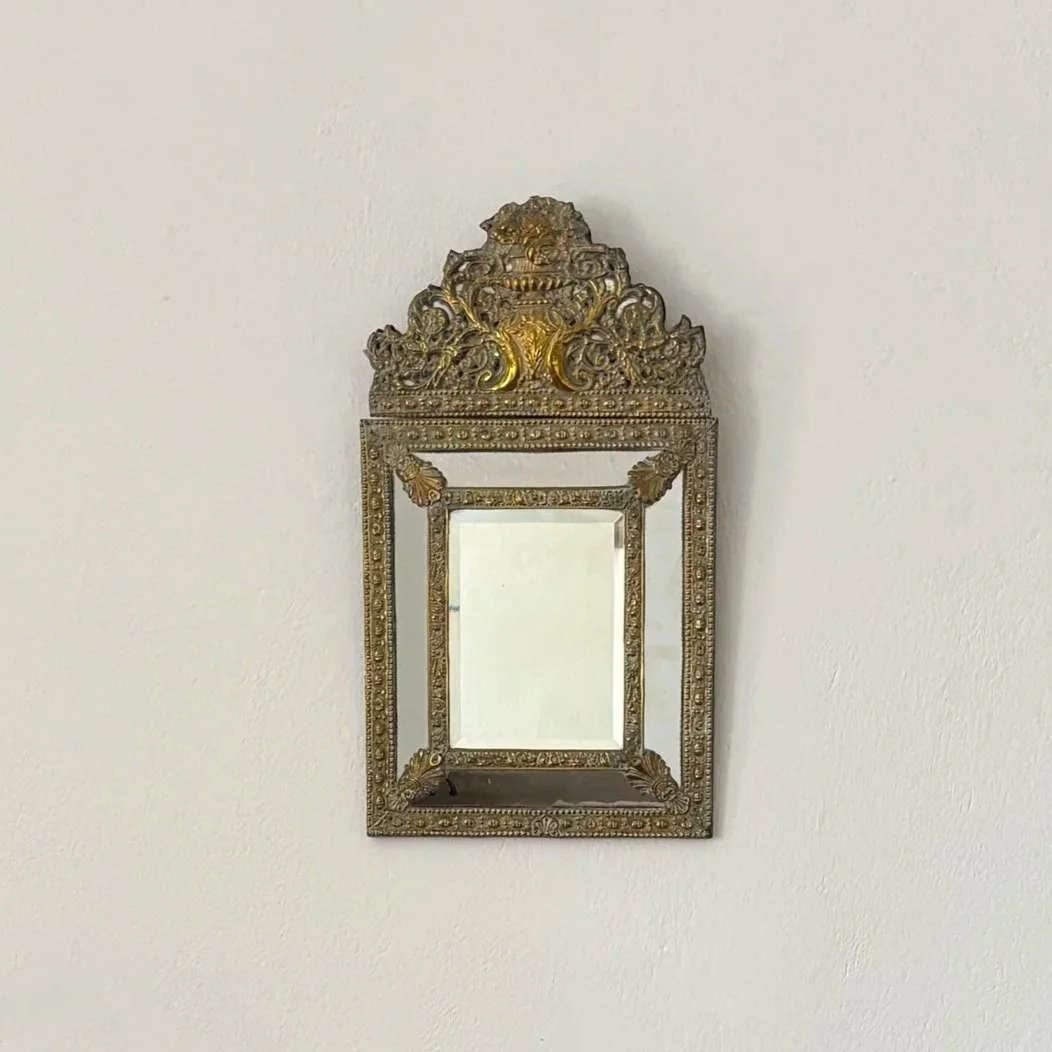
Parclose mirrors enjoyed renewed popularity in France during the Napoleon III period (1852–1870), an era characterised by a taste for rich decoration and the revival of earlier historical styles. Their distinctive construction features a central mirror surrounded by smaller mirrored panels, or parcloses, often set within an elaborately carved and gilded wooden frame. Inspired by the grandeur of 17th- and 18th-century interiors, Napoleon III examples tend to be particularly decorative, incorporating scrolls, foliage, flowers and architectural motifs. Designed to catch and multiply the light, these mirrors brought both brilliance and a sense of opulence to the sophisticated interiors of Second Empire France.
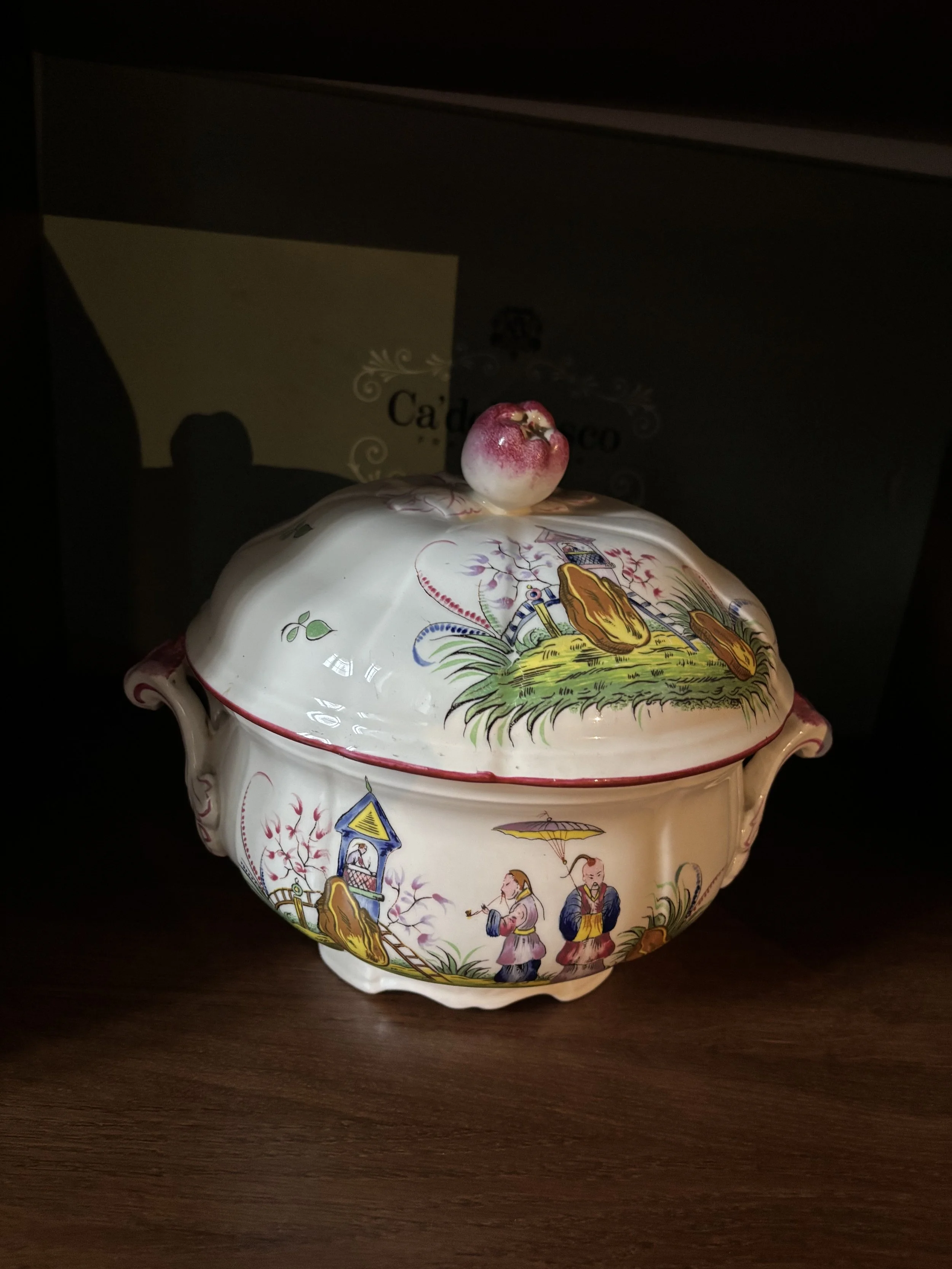
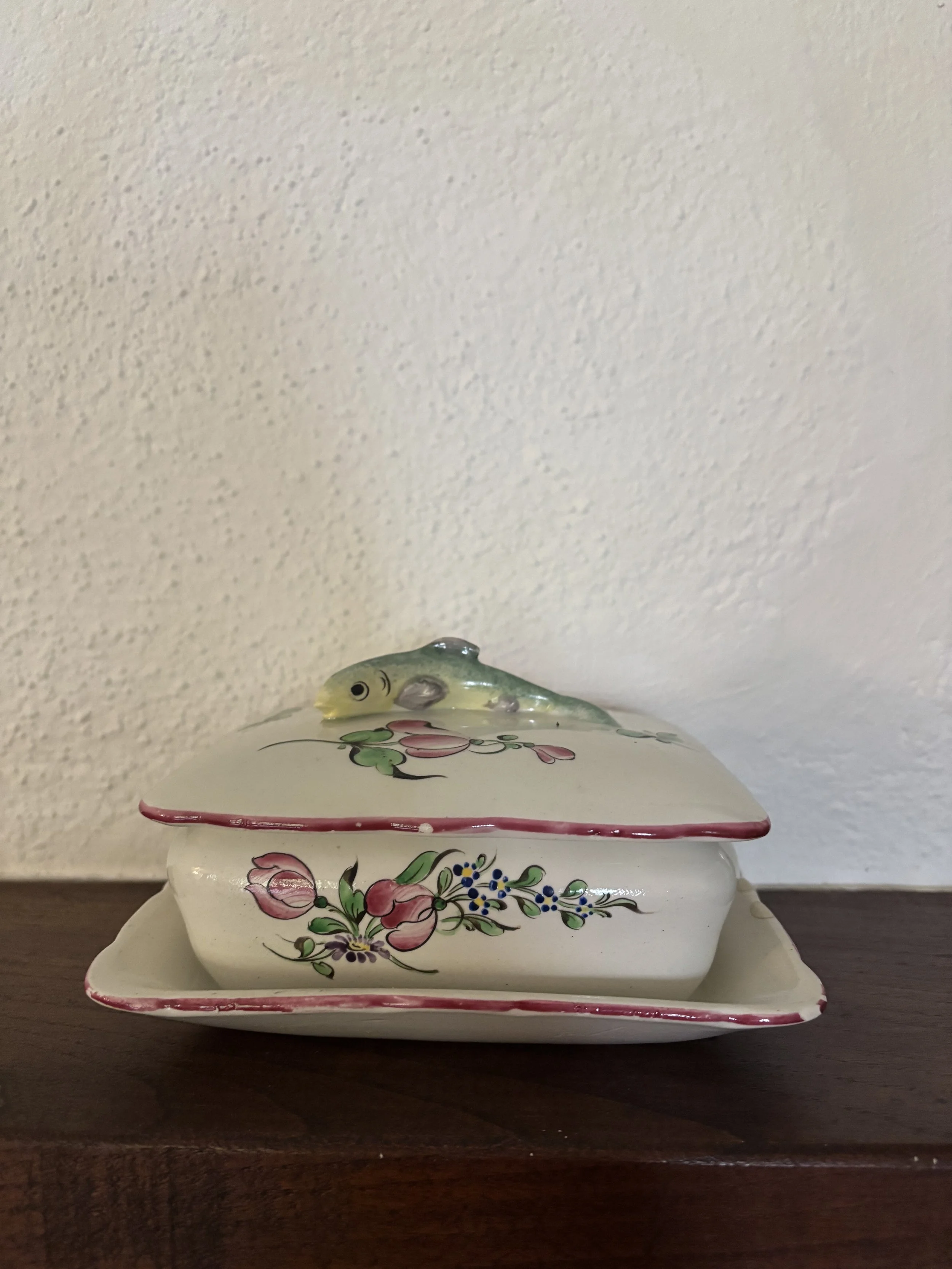
A decorative Lunéville faience tureen with a domed cover, painted in vibrant enamels with an Asian-inspired landscape of figures, pavilions, flowering trees and rockwork. The cover is topped with a naturalistically modelled fruit finial, while the shaped body is finished with scrolling handles and pink-edged borders.
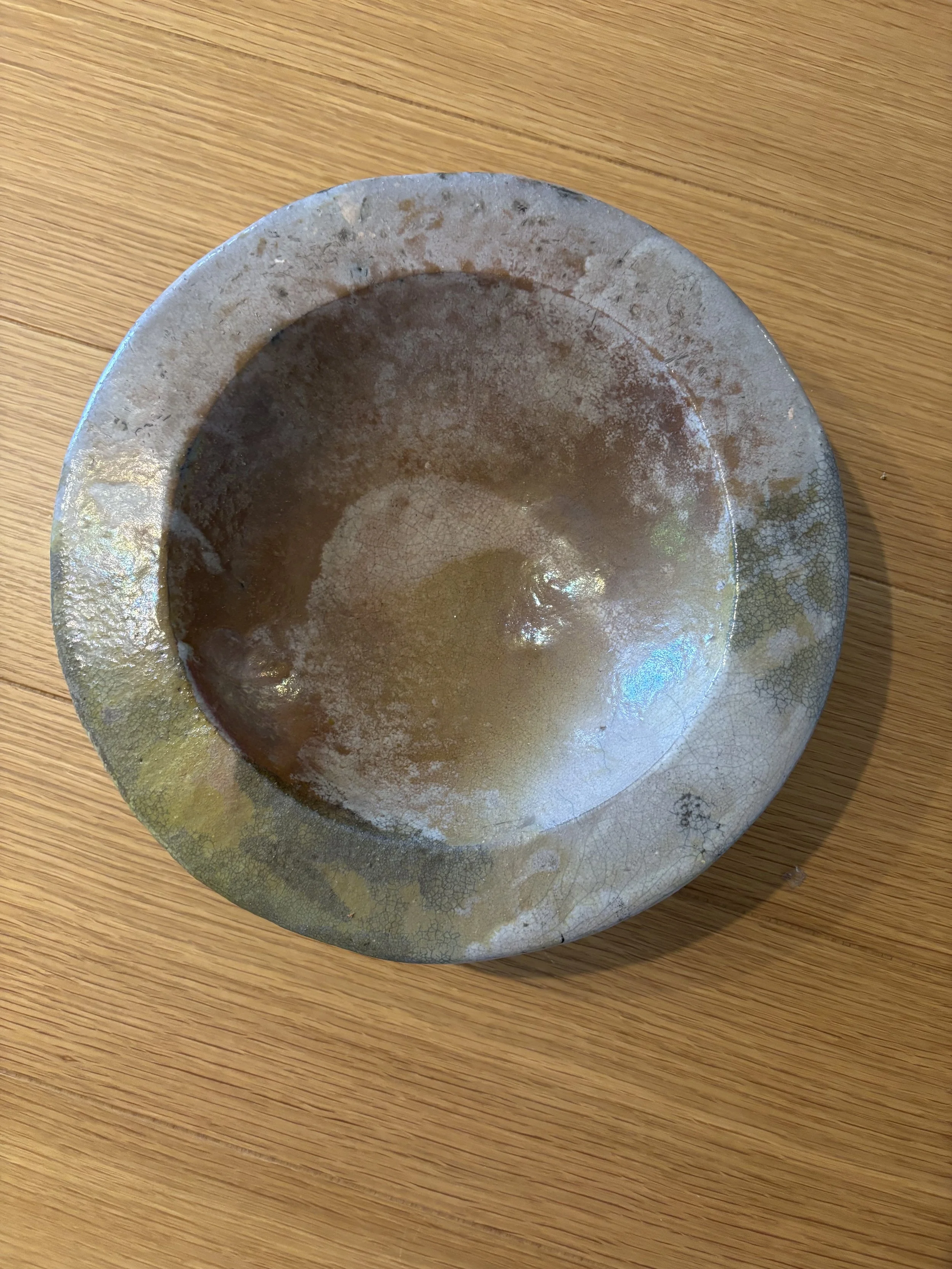
Dieulefit, France, 20th century
A sculptural tripod dish crafted in Dieulefit, an important centre of French studio pottery. The broad, irregularly shaped bowl is covered in a richly varied glaze combining earthy brown, smoky grey and pale green tones, with areas of fine crackling and subtle iridescence. Its three-footed form and deliberately uneven surface give the piece a strong handmade, organic character.
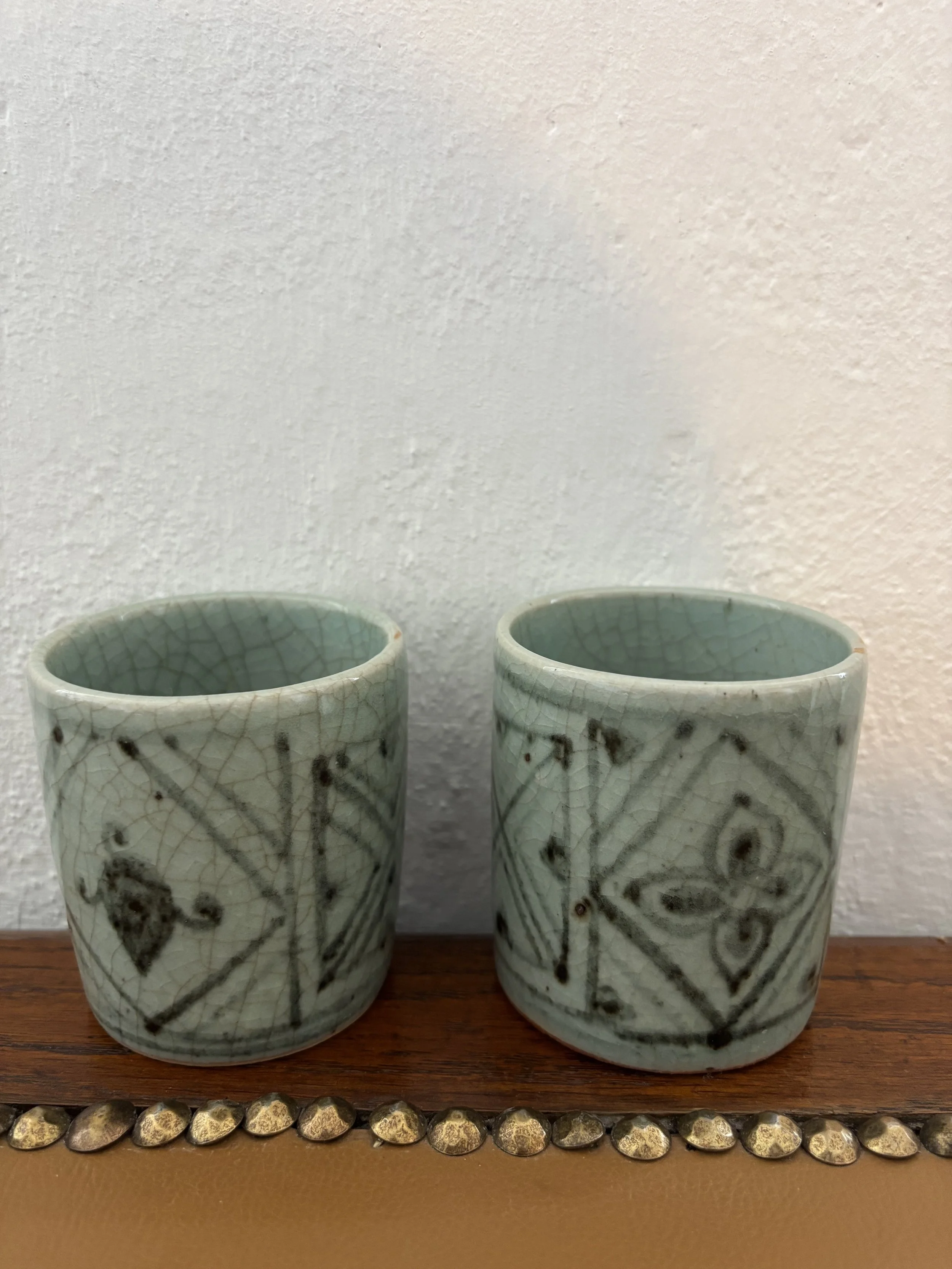
Handcrafted ceramic tumblers from Sukhothai, Thailand, inspired by the region's centuries-old Sangkhalok pottery tradition. Their softly crackled celadon glaze and freely painted dark motifs recall the ceramics produced in the historic kilns of Sukhothai and Si Satchanalai from the medieval period onwards. Each piece bears subtle variations in its glaze and decoration, giving it an individual character and reflecting a living Thai ceramic tradition.
Raymond Peynet (1908–1999) was a French illustrator and cartoonist best known for Les Amoureux de Peynet, the tender young couple he created in 1942, inspired by a music pavilion in Valence.
With his delicate line, gentle humour and unmistakably romantic spirit, Peynet created a poetic world celebrating love and everyday tenderness. His famous lovers became an icon of post-war French popular culture, appearing on everything from books and posters to porcelain, jewellery, dolls and postage stamps.
In Le Petit Distrait (1943), Raymond Peynet creates a charming visual joke around a moment of innocent distraction. While the children ride the nearby carousel, one little boy has mistakenly climbed onto the back of the statue of Henri IV, apparently believing he has taken his place on one of the merry-go-round horses. Left behind as the carousel turns, he becomes the petit distrait of the title. With his delicate line and gentle humour, Peynet transforms this simple misunderstanding into a wonderfully poetic scene, characteristic of his affectionate observation of everyday life.
Lunéville has been one of the great centres of French ceramic production since the 18th century, when its celebrated faience manufacture was established in Lorraine. Over the following centuries, the workshops of Lunéville developed an extraordinarily varied production, from refined tableware to highly decorative objects, often distinguished by lively hand-painted flowers, botanical motifs and elegant forms. Particularly flourishing during the 19th and early 20th centuries, Lunéville ceramics combine traditional craftsmanship with the changing tastes of French decorative arts, from historicist designs to Art Nouveau and Art Deco.
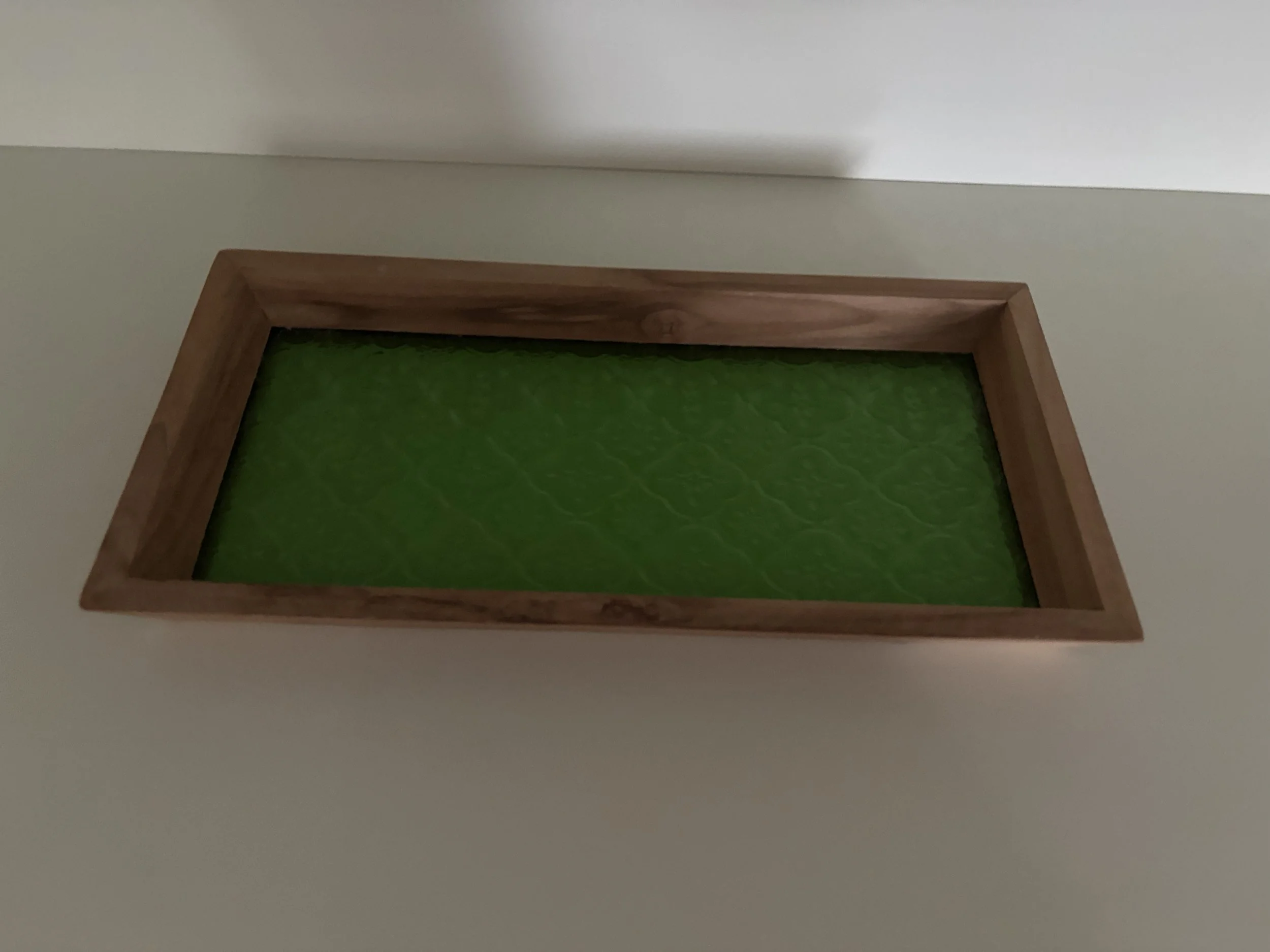
A decorative tray made from coloured glass reclaimed from the windows of old traditional Thai houses. Originally used to filter the tropical light while bringing colour to domestic interiors, these vintage glass panels are given a new life as contemporary decorative objects.
Each piece retains the subtle variations and character of the original glass, making every tray slightly unique — a beautiful example of Bangkok craftsmanship combining architectural heritage with creative reuse.
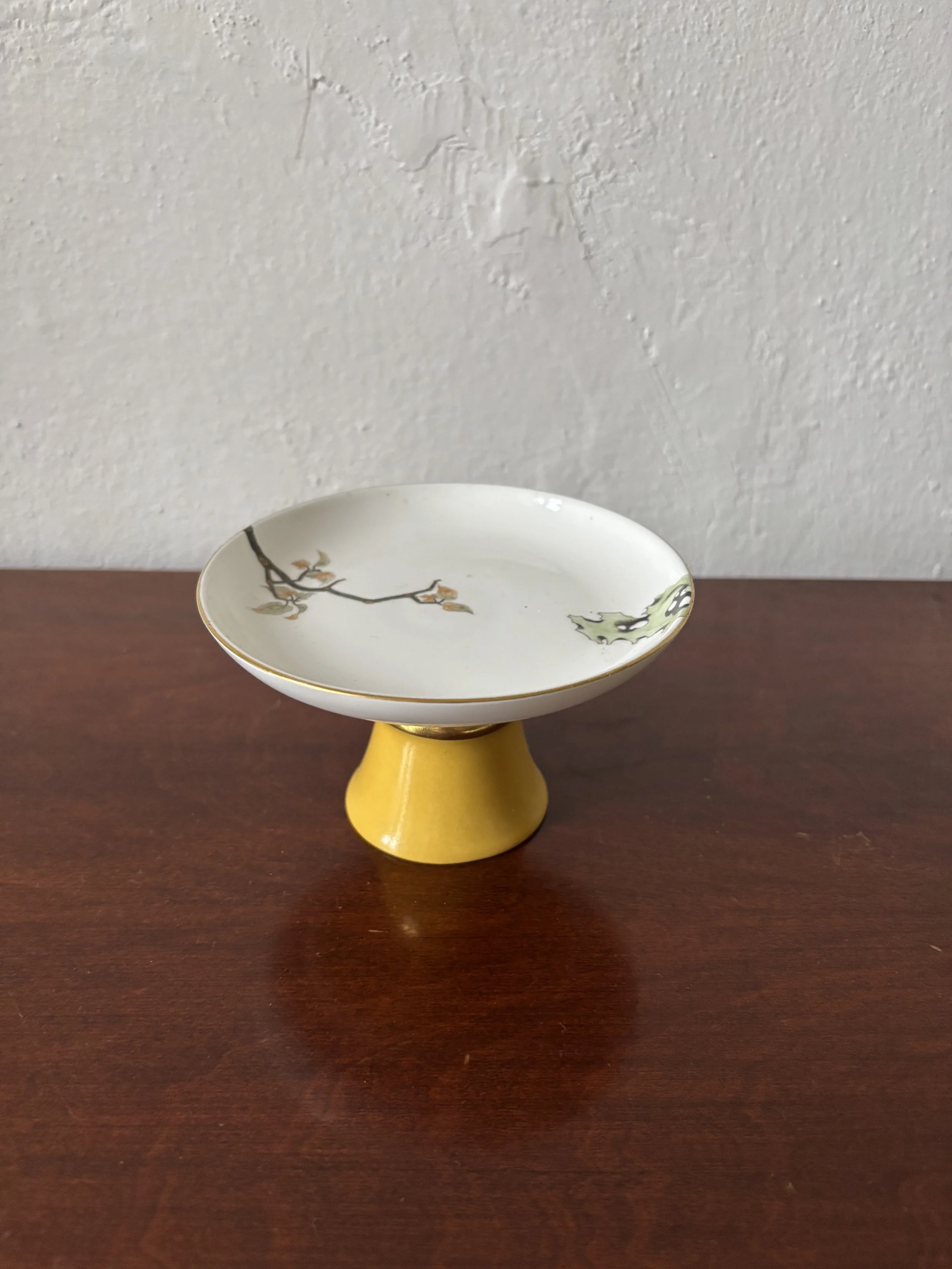
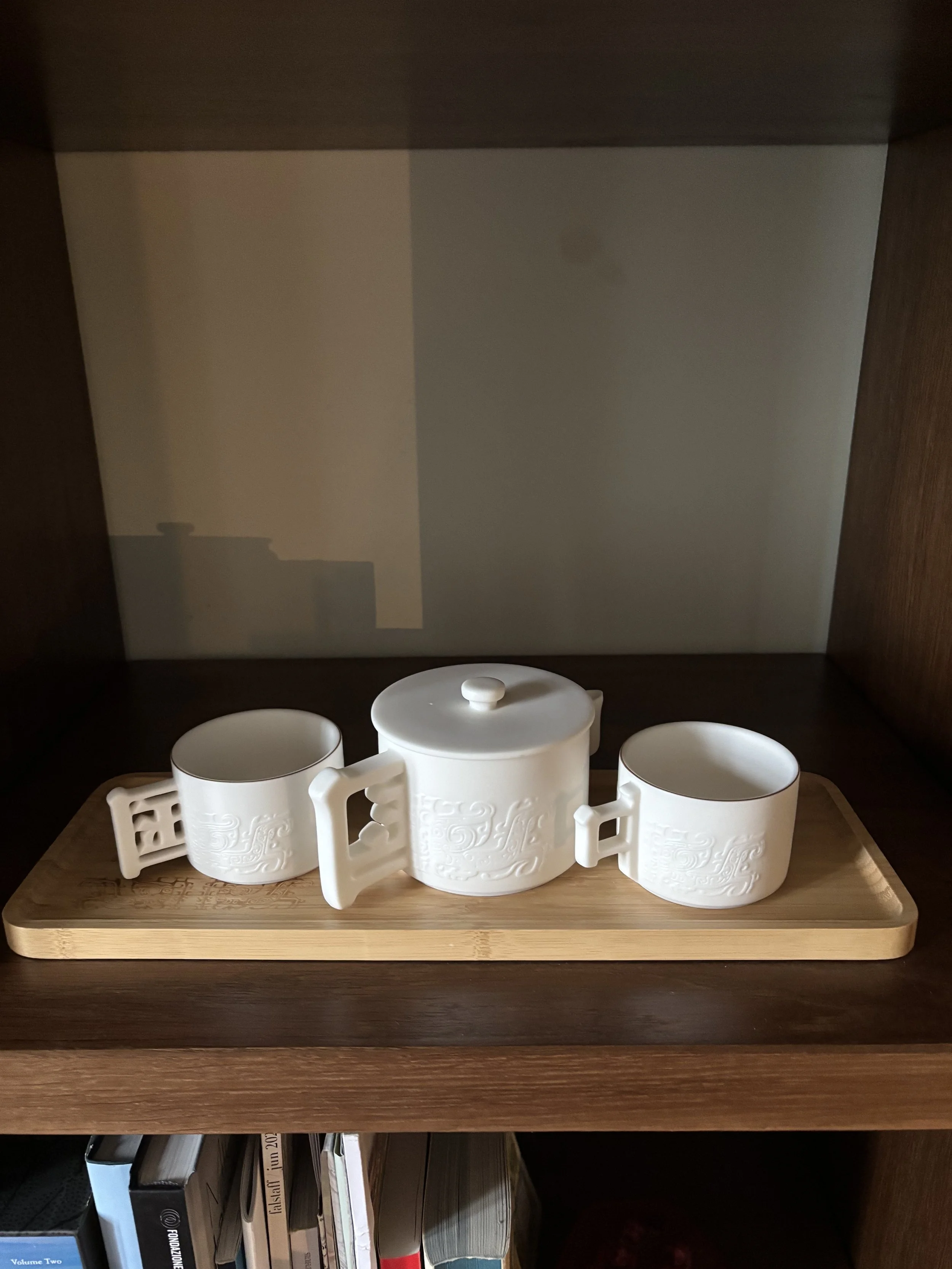
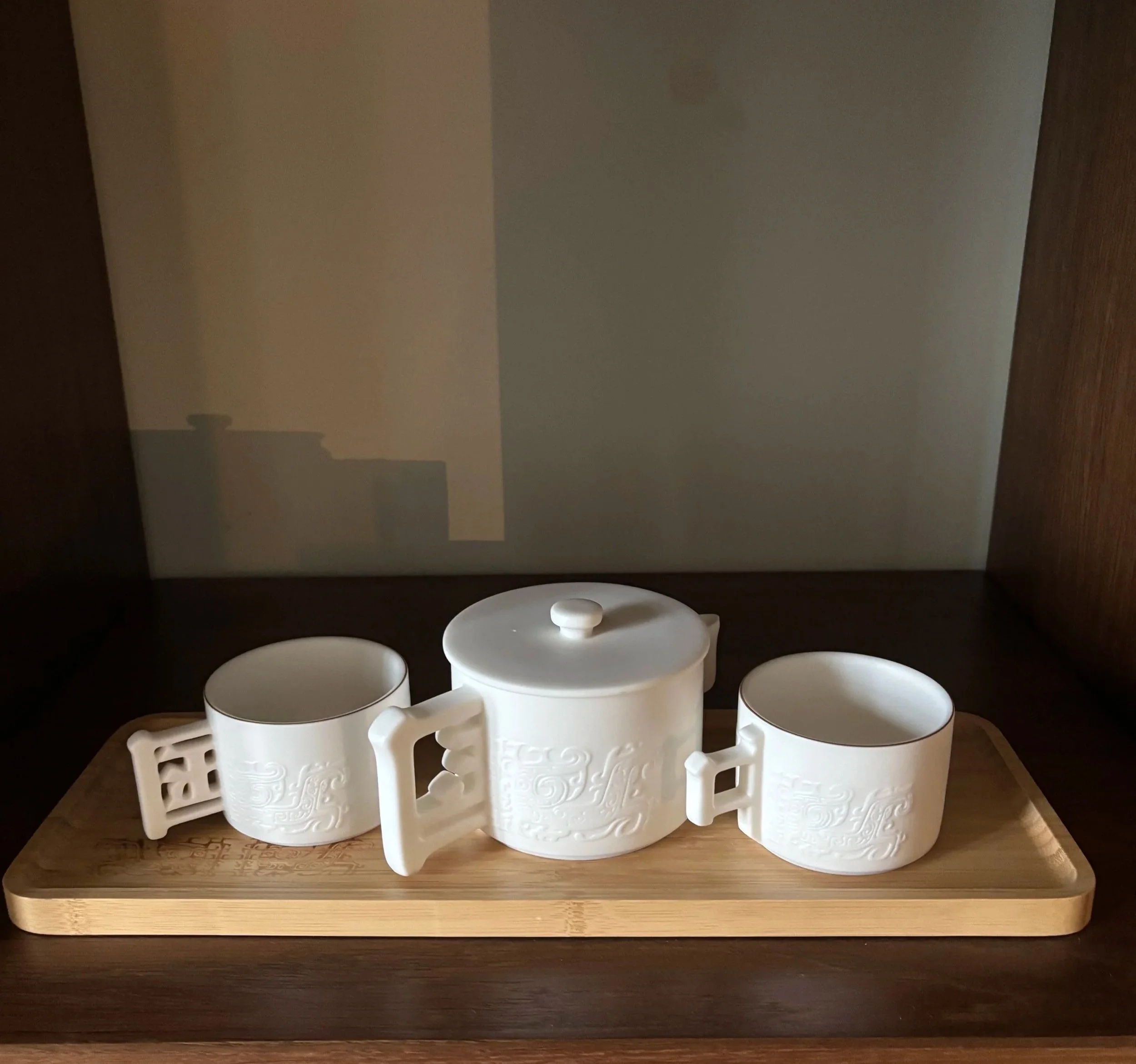
A contemporary Chinese porcelain stem cup inspired by ancient forms, echoing the elegant proportions and decorative vocabulary of traditional Chinese porcelain. Its delicate painted decoration and elevated foot reinterpret a centuries-old design, creating a piece that feels both historical and distinctly modern
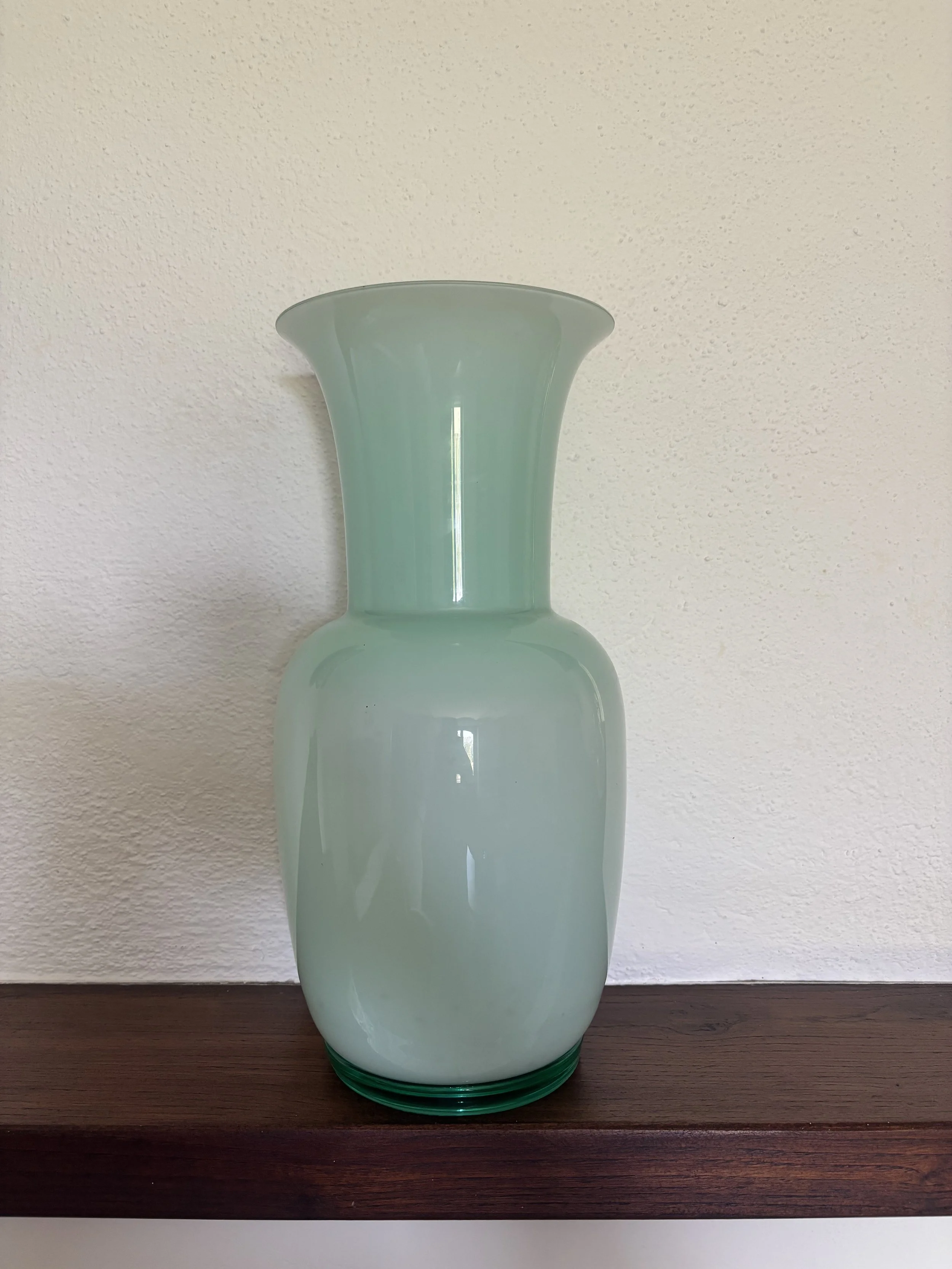
Design: Venini
Murano, Italy, 2nd half of 20th century
An Opalino vase by Venini, one of Murano’s most celebrated glassmakers. Introduced in the mid-20th century, the Opalino technique combines layers of translucent and opaque glass to create its distinctive soft, luminous appearance and remarkable depth of colour. Elegant in its simplicity, the vase embodies the refined approach to form and colour that made Venini an icon of modern Italian design.
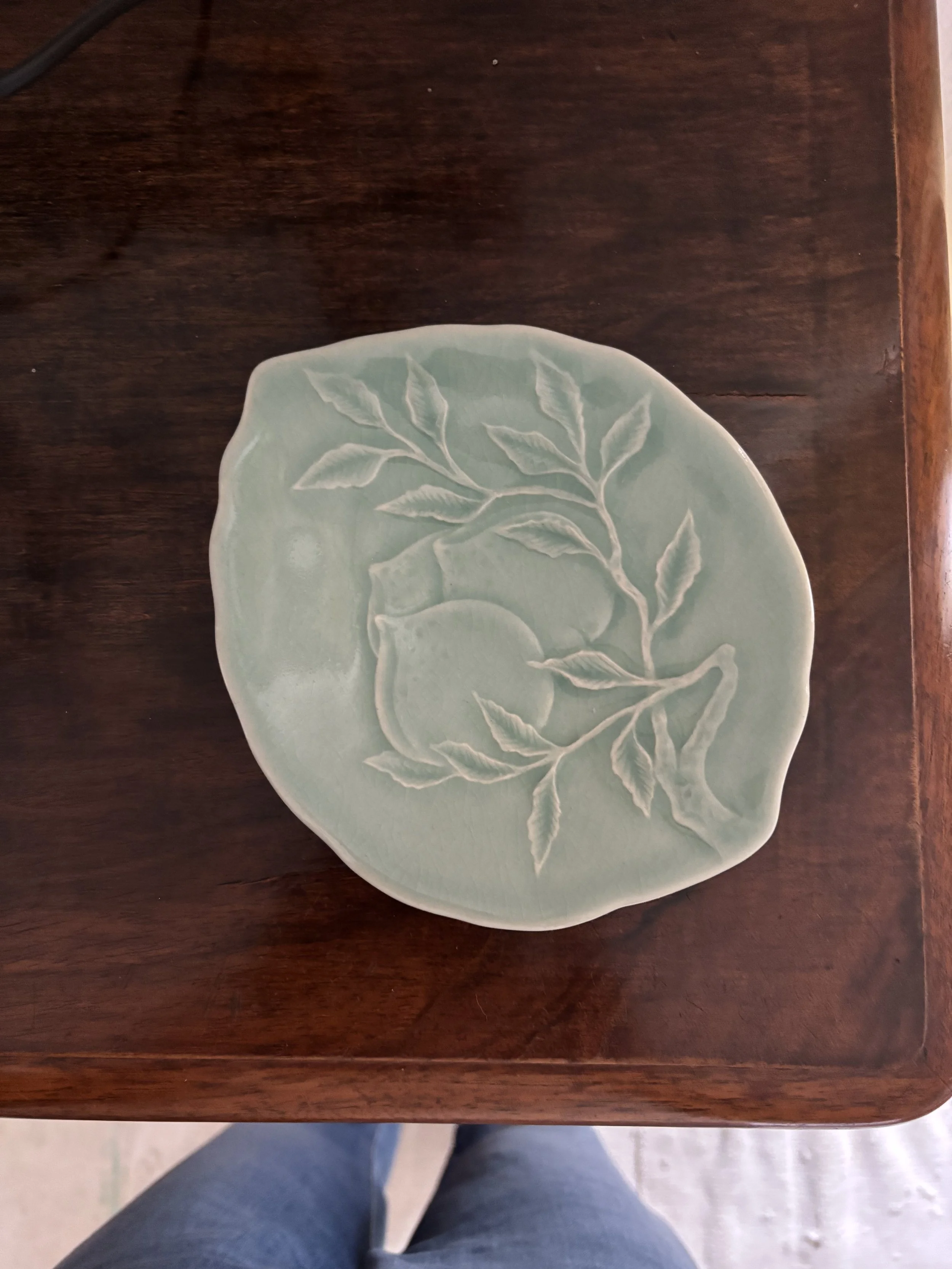
Korea, 21st century
A delicate contemporary Korean ceramic dish, finished in a soft celadon-green glaze. Its gently irregular form is decorated in relief with a naturalistic branch of fruit and leaves, creating a subtle contrast against the pale, luminous surface. A beautiful contemporary interpretation of Korea’s long tradition of celadon ceramics.
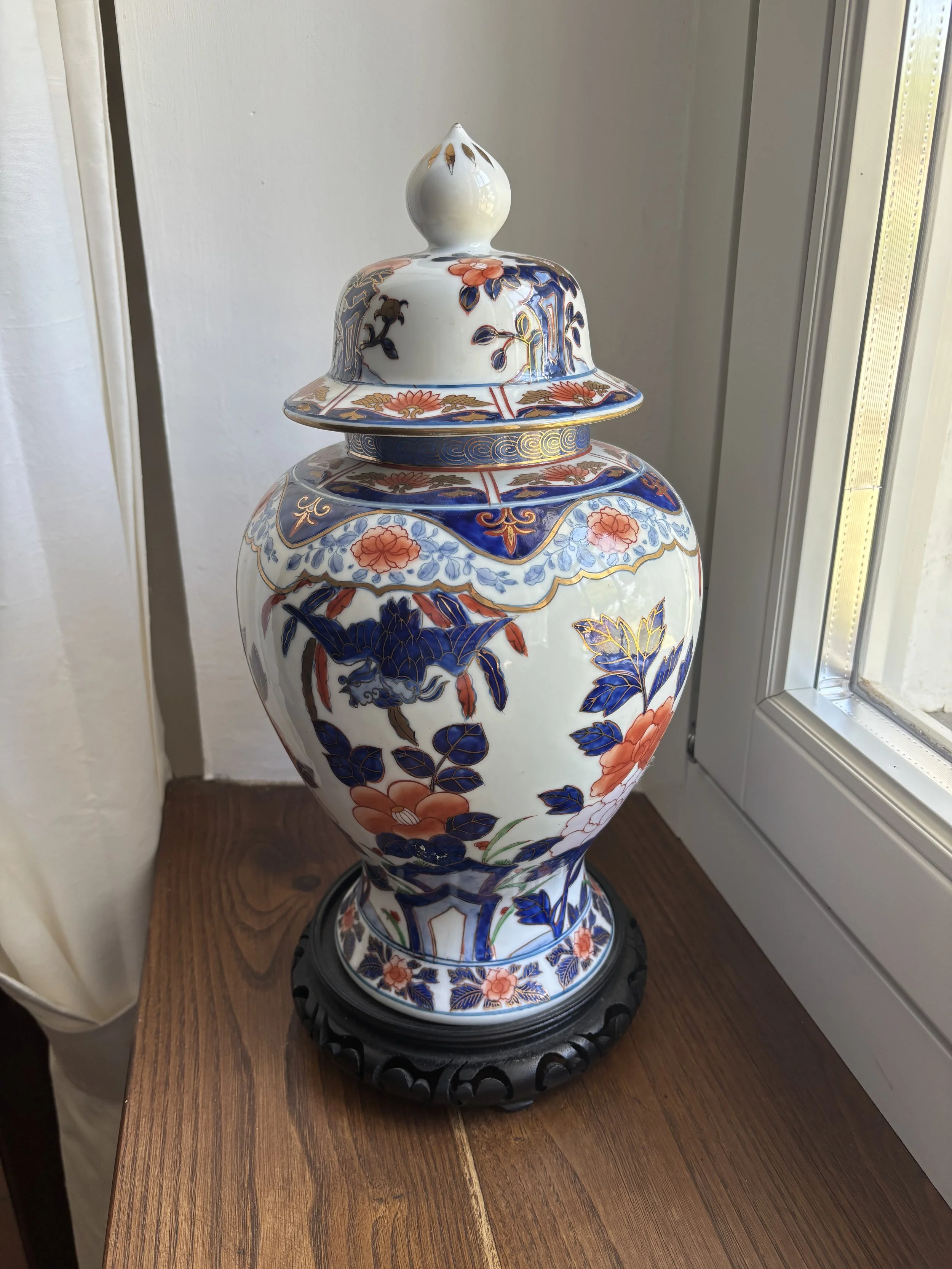
A large Chinese porcelain baluster jar and cover, dating from the 19th century and decorated in the vibrant Imari palette of cobalt blue, iron red, green and gilt. Peonies and flowering branches unfold across the body, framed by richly ornamented borders. The base bears an apocryphal Kangxi reign mark, reflecting the 19th-century revival of earlier Qing porcelain traditions. Complete with its original decorated cover and presented on a carved wooden stand.
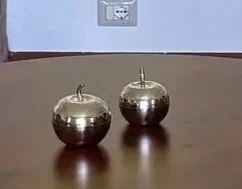
A charming pair of silver boxes in the shape of apples, handmade in a traditional silver workshop in Bangkok. With their softly rounded forms, removable lids and delicate stems, they recall the playful fruit-shaped decorative objects created by European luxury houses throughout the 20th century, such as Christofle.
Both decorative and practical, they make elegant trinket boxes while also working beautifully as sculptural objects on a coffee table, console or shelf.
No results match your search. Try removing a few filters.